A property’s exterior plays an important role in attracting potential buyers, creating a positive first impression, and improving overall appeal. From lush green lawns and beautiful gardens to functional outdoor living spaces, the right landscaping can transform an ordinary property into a more attractive and welcoming environment. Landscaping for Property Value is a practical investment for homeowners and commercial property owners who want to enhance their property’s appearance and usability. Professional landscaping combines thoughtful design, suitable plant selection, and proper maintenance to create outdoor spaces that complement the building. Whether you are planning to sell your property or simply want to improve its appearance, strategic landscaping can make a noticeable difference. In this article, we will explore the benefits of professional landscaping, valuable outdoor upgrades, sustainable design ideas, and ways to make informed landscaping decisions.
Why Professional Landscaping Matters for Property Value
A property’s value is influenced by more than its interior design, floor plan, and location. The outdoor environment also shapes how buyers, tenants, visitors, and investors perceive a property before they even step inside. Well-maintained lawns, attractive planting beds, healthy trees, clean walkways, and thoughtfully designed outdoor areas create a positive first impression. Professional landscaping brings these elements together through a planned approach that balances visual appeal, functionality, and long-term maintenance. Landscaping for Property Value is especially important for owners who want to make their properties more attractive while improving the usability of their outdoor spaces. Instead of relying on temporary decorative changes, a professional landscape plan considers the property’s layout, climate, soil conditions, drainage requirements, and intended use. These improvements can help a property stand out in a competitive real estate market and make its exterior feel more welcoming. Although landscaping cannot guarantee a specific increase in market price, investing in the right improvements can strengthen a property’s overall presentation and buyer appeal. Learn more about our company’s expertise, experience, and commitment to quality through our professional background and approach.
How Landscaping Improves Curb Appeal and First Impressions
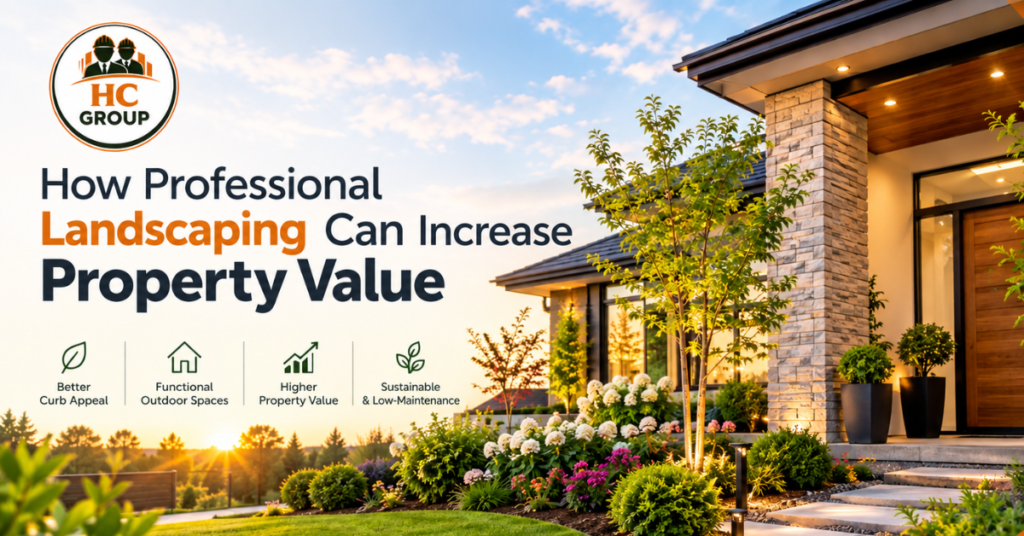
Curb appeal refers to the overall attractiveness of a property when viewed from the street or entrance. It plays an important role in shaping initial perceptions, particularly when prospective buyers are comparing several homes or commercial buildings. A clean, organized, and visually balanced landscape can make a property appear more inviting and well maintained. Professional landscapers consider the placement of plants, lawn edges, pathways, lighting, and entrance features to create a consistent appearance. Even relatively simple improvements can make an exterior look more polished without requiring a complete landscape renovation.
Key landscaping elements that strengthen curb appeal
- A well-maintained lawn: Healthy grass, neat edges, and consistent care create a clean foundation for the entire landscape.
- Seasonal flowers and plants: Carefully selected colors and textures add visual interest without making the garden feel overcrowded.
- Defined walkways: Clear, attractive pathways guide visitors toward the entrance and improve everyday accessibility.
- Trees and shrubs: Appropriate planting adds structure, greenery, privacy, and shade where needed.
- Outdoor lighting: Well-positioned lights can highlight entrances, pathways, and architectural features after sunset.
- A clean front entrance: Uncluttered planting beds and coordinated greenery help create a welcoming arrival experience.
Why the first impression matters
Buyers often begin forming opinions before they view the interior, so an unattractive or neglected exterior can affect how they perceive the rest of the property. Overgrown plants, damaged paving, patchy grass, and poor drainage may suggest that additional maintenance is needed. In contrast, a balanced landscape communicates care and attention to detail. A professional design can also help connect the building’s exterior features with the surrounding garden, making the property feel more complete. For homeowners preparing to sell, improving curb appeal is a practical way to make listing photographs and in-person viewings more appealing.
Landscaping Improvements with High ROI
Not every landscaping project delivers the same financial benefit. The potential return depends on the property’s location, current condition, buyer expectations, quality of installation, and the cost of ongoing maintenance. The most effective approach is to prioritize improvements that solve visible problems, improve everyday usability, and complement the property’s market position. Rather than assuming that the most expensive project will create the greatest return, property owners should evaluate each upgrade according to its purpose and likely appeal.
Consider these improvements when planning your budget:
- Lawn restoration: Repair bare patches, improve soil conditions, and establish a consistent maintenance routine to create a healthier appearance.
- Tree and shrub planting: Add suitable greenery to introduce structure, shade, and privacy while allowing enough room for mature growth.
- Garden bed renovation: Replace overcrowded or unhealthy plants with a coordinated selection suited to the local climate.
- Pathway and entrance upgrades: Repair uneven surfaces, improve access, and create a more organized route to the property.
- Outdoor lighting installation: Improve visibility and highlight important landscape features with appropriately placed fixtures.
- Irrigation improvements: Consider efficient watering systems where they can reduce waste and support consistent plant health.
- Drainage correction: Address standing water and runoff problems before investing in decorative improvements.
When evaluating Landscaping for Property Value, look beyond the initial installation cost and consider the expected lifespan of materials, water requirements, maintenance expenses, and the needs of likely buyers. A straightforward, well-executed upgrade may be more beneficial than a complicated feature that requires frequent repairs. Ask landscaping professionals to explain the purpose of each recommendation and provide a realistic estimate of ongoing costs. Property owners should also compare proposed improvements with the standards of similar properties in their area. This makes it easier to invest in landscaping that feels appropriate rather than excessive.
How Outdoor Living Spaces Increase Property Appeal
Outdoor areas can become valuable extensions of a property’s usable space when they are designed with comfort and function in mind. A patio, shaded seating area, landscaped courtyard, or attractive garden can give residents and visitors more opportunities to relax, socialize, and enjoy the surroundings. For homes with limited indoor space, a practical outdoor area may provide an additional place for dining, entertaining, or spending time with family. Commercial properties can also benefit from thoughtfully designed outdoor environments that improve the experience of employees, customers, and guests. The key is to create spaces that suit the building’s purpose rather than adding features simply for decoration.
Outdoor features worth considering
Patios and seating areas: A durable patio with comfortable seating can create a defined destination within the garden. Choose materials that suit the local climate and require a manageable level of upkeep.
Pergolas and shaded spaces: Shade structures can make outdoor areas more comfortable during warmer weather. Their placement should consider sunlight, airflow, safety, and the building’s overall design.
Garden pathways: Paths connect different parts of the landscape and help people move around without damaging grass or planting beds.
Privacy planting: Trees, hedges, and carefully positioned shrubs can create a more secluded environment where the layout allows.
Landscape lighting: Lighting can support evening use and make outdoor areas feel more inviting, provided that glare and light pollution are controlled.
Water features: Fountains and similar features can create a focal point, but their installation and maintenance costs should be considered before proceeding.
Successful outdoor design begins with understanding how the space will be used. A small garden may benefit from a compact seating area and carefully arranged plants, while a larger property may accommodate separate zones for relaxation, dining, and recreation. Keeping circulation routes clear and selecting durable materials can improve convenience over time. These choices help create outdoor environments that feel intentional, attractive, and practical for future occupants. If you are ready to improve your outdoor space, Discuss Your Project with HC’s Expert Team to explore landscaping solutions tailored to your property’s needs.
Sustainable Landscaping and Eco-Friendly Property Improvements
Sustainable landscaping focuses on creating attractive outdoor environments while using water, soil, plants, and other resources responsibly. This approach can be particularly useful in areas that experience hot weather, limited rainfall, or changing seasonal conditions. Selecting plants suited to the local climate can reduce the need for excessive watering and frequent replacement. Mulching, improving soil health, and grouping plants according to their water requirements can also support healthier gardens. For property owners interested in Landscaping for Property Value, sustainability offers a way to combine visual appeal with practical resource management.
Sustainable landscaping practices to include
- Native and climate-adapted plants: Choose species that can thrive under local growing conditions and are appropriate for the available space.
- Water-efficient irrigation: Use suitable irrigation methods and schedules to reduce unnecessary water use.
- Rainwater management: Plan grading, drainage, and rain gardens where appropriate to manage runoff and limit water accumulation.
- Organic mulch: Apply suitable mulch to help retain soil moisture, moderate soil temperatures, and reduce weed growth.
- Healthy soil management: Improve soil structure and drainage to support stronger plant development.
- Efficient outdoor lighting: Select appropriate fixtures and controls to avoid unnecessary energy consumption.
- Biodiversity-friendly planting: Where suitable, incorporate a variety of plants that provide seasonal interest and support local wildlife.
Sustainable design should be adapted to the property’s actual environmental conditions rather than treated as a one-size-fits-all solution. For example, a water-conscious garden may use drought-tolerant plants, while a shaded site may need species that perform well with limited direct sunlight. Proper drainage is equally important because plants that suit dry conditions may not thrive in consistently waterlogged soil. A professional assessment can help determine which methods are practical for the location, budget, and maintenance routine. These choices can support a healthier landscape while helping owners manage long-term resource use.
Low-Maintenance Landscaping for Long-Term Value
A beautiful garden is more useful when it can be maintained without excessive time, expense, or effort. Low-maintenance landscaping focuses on choosing suitable plants, durable materials, efficient layouts, and practical irrigation systems. It does not mean removing all greenery or creating a plain outdoor environment. Instead, it involves reducing unnecessary work while preserving visual interest and functionality. This approach can appeal to homeowners, landlords, and commercial property managers who want an attractive exterior without a demanding maintenance schedule.
How to create a low-maintenance landscape
Choose plants carefully: Select varieties suited to the local climate, soil, sunlight, and available water. Plants that naturally thrive in the environment may need less intervention than unsuitable species.
Reduce complicated lawn areas: Where appropriate, replace difficult-to-maintain sections with ground cover, planting beds, gravel areas, or functional hardscaping.
Use durable materials: Select paving, edging, and outdoor structures that can withstand expected weather and regular use.
Install efficient irrigation: A well-designed system can make watering more consistent and reduce the need for manual watering.
Plan for mature plant size: Allow enough room for trees and shrubs to grow so they do not require constant trimming or create avoidable maintenance problems.
Schedule routine care: Regular pruning, weed control, inspections, and seasonal cleanup can prevent small issues from becoming expensive repairs.
A low-maintenance garden should be planned around the property owner’s actual capacity to care for it. A rental property may benefit from durable planting and straightforward lawn care, while a private residence may justify more detailed garden features if the owner enjoys maintaining them. Avoid choosing plants based only on their appearance at the nursery, because their mature size and growing requirements matter just as much. By considering maintenance from the beginning, property owners can preserve the landscape’s appearance and reduce the likelihood of costly redesigns.
Read more: Landscaping Services in Lahore: Benefits Guide
How Professional Landscaping Supports Property Marketability
A well-presented exterior can help a property attract attention in online listings, property brochures, and in-person viewings. Clear lawn edges, healthy planting, clean paving, and an organized entrance create a stronger visual presentation in photographs. These details may encourage prospective buyers to explore the listing or arrange a viewing, although they cannot guarantee a sale or a higher offer. Landscaping can also help communicate how outdoor areas might be used, which is especially helpful when a property has a large garden, courtyard, or underused exterior space.
For sellers, the most effective strategy is to focus on visible improvements that photograph well and address obvious maintenance issues. Remove dead plants, tidy planting beds, clean walkways, and ensure that the entrance looks welcoming. If the property has a usable patio or garden seating area, arrange it to demonstrate its purpose without overcrowding the space. Avoid making last-minute changes that could leave the garden unfinished before photographs or viewings. These practical steps can help the property make a consistent impression across digital and in-person marketing.
Residential vs. Commercial Landscaping: Different Value Benefits
The right landscape design depends on the type of property, the people who use it, and the expectations of its market. Residential landscaping often prioritizes comfort, privacy, curb appeal, and spaces for everyday living. Commercial landscaping places greater emphasis on access, safety, brand presentation, customer experience, and efficient maintenance. In both cases, the objective is to create an exterior that supports the property’s purpose while remaining visually cohesive.
Residential landscaping priorities
- Welcoming entrances and attractive front gardens
- Functional outdoor living areas for relaxation and entertaining
- Suitable trees and shrubs for shade and privacy
- Safe, accessible paths and outdoor steps
- Manageable planting choices and long-term maintenance planning
Commercial landscaping priorities
- Clear and accessible entrances, paths, and parking areas
- Professional planting schemes that complement the building’s identity
- Durable landscaping materials for areas with frequent foot traffic
- Appropriate lighting and visibility around access routes
- Efficient irrigation and maintenance plans for larger sites
Commercial property owners should also consider how landscaping affects the experience of customers, employees, tenants, and visitors. An office, retail space, hospitality venue, or residential development may require a different combination of greenery, hardscaping, and outdoor amenities. Residential owners, meanwhile, should ensure that garden improvements complement the home’s architecture and the expectations of local buyers. In either setting, a landscape plan should balance appearance with practical requirements instead of focusing on decorative features alone.
How Much Does Professional Landscaping Cost?
The cost of professional landscaping varies according to the size of the site, the existing condition of the outdoor area, design complexity, plant selection, materials, labor, irrigation, lighting, and drainage requirements. A basic garden cleanup or lawn restoration project will generally involve different costs from a complete redesign with patios, retaining walls, mature trees, and custom outdoor features. Location and material availability can also influence the final budget. For this reason, property owners should request a detailed, site-specific estimate instead of relying on a single average price.
Before starting a project, define the main goals and separate essential improvements from optional features. Ask for itemized costs covering design, preparation, materials, installation, irrigation, and any required follow-up maintenance. It is also sensible to discuss how the landscape will perform over time, including plant replacement, pruning, watering, and repairs. When considering Landscaping for Property Value, compare the likely benefits of each upgrade with its upfront and ongoing expenses. A phased approach can help owners complete the most important work first while leaving room for future improvements.
Questions to ask before approving a landscaping quote
- What work is included in the quoted price?
- Are site preparation, soil improvement, and debris removal included?
- Which plants and materials are recommended, and why?
- Will irrigation or drainage improvements be necessary?
- What maintenance will the completed landscape require?
- Is there a clear project schedule and written scope of work?
- Which costs could change if unexpected site conditions are discovered?
A professional quotation should make the proposed work understandable and help prevent misunderstandings during installation. Be cautious of estimates that do not clearly describe materials, quantities, labor, or exclusions. The lowest price may not represent the best overall value if it involves unsuitable plants, poor preparation, or materials that need frequent replacement. Comparing detailed proposals makes it easier to assess quality, suitability, and long-term costs before committing to a project.
Common Landscaping Mistakes That Can Reduce Property Appeal
Landscaping can improve a property’s appearance, but poorly planned work may create additional costs or make the exterior less practical. One common mistake is choosing plants based only on their immediate visual appeal without considering their mature size, sunlight requirements, or water needs. Overcrowded planting can block windows, obstruct paths, and make routine maintenance difficult. Similarly, adding expensive features without considering the property’s style or likely users may result in a garden that feels disconnected from the building. Good landscape planning prevents these issues by prioritizing proportion, function, and suitability.
Other problems include ignoring drainage, installing inadequate outdoor lighting, selecting slippery paving materials, and allowing trees or shrubs to interfere with structures or utilities. Excessive lawn areas may also create unnecessary watering and maintenance demands in locations where grass is difficult to sustain. Property owners should avoid designing an outdoor space that depends on constant upkeep unless they have the resources to maintain it. Before beginning installation, review the layout, drainage conditions, access routes, and maintenance requirements. Correcting these issues during planning is often easier than fixing them after the landscape has been completed.
How to Choose the Right Professional Landscaping Company
Selecting a suitable landscaping company is an important step toward achieving a durable and attractive result. Look for a provider with relevant project experience, clear communication, a practical design process, and an understanding of local growing conditions. Reviewing previous projects can help you evaluate the quality of planting, hardscaping, finishing, and overall design consistency. It is also useful to ask how the company approaches site assessment, irrigation, drainage, material selection, and maintenance planning. A reliable provider should be willing to explain its recommendations and adapt the proposed work to your property’s requirements.
What to evaluate before hiring
Portfolio and relevant experience: Review completed projects that resemble your property’s size, style, or intended use.
Design and planning process: Ask whether the company assesses the site before recommending plants, materials, and outdoor features.
Transparent pricing: Request a written estimate that identifies the scope of work, materials, labor, and exclusions.
Communication and scheduling: Confirm who will manage the project, how updates will be provided, and what timeline is realistic.
Plant and material suitability: Check that proposed selections are appropriate for the local climate, soil, drainage, and expected use.
Aftercare guidance: Understand what maintenance is required after installation and whether ongoing services are available.
References and documentation: Where appropriate, request references, written terms, and details of any applicable workmanship or product warranties.
For property owners seeking a coordinated approach to landscape design and installation, HC Group can be considered alongside other providers according to project requirements, experience, and scope of service. The most important factor is choosing a professional who understands your objectives and can explain how each recommendation supports them. A clear plan, realistic budget, and suitable maintenance strategy will help you evaluate the project beyond its immediate visual impact.
Final Thoughts
Professional landscaping can be a worthwhile improvement when it addresses a property’s needs, enhances its appearance, and creates outdoor spaces that people can use comfortably. From improving curb appeal and restoring a tired lawn to developing practical seating areas and sustainable planting schemes, the right upgrades can make an exterior more inviting. However, the financial outcome depends on the local real estate market, project costs, design quality, and buyer expectations. Property owners should therefore avoid treating landscaping as a guaranteed route to a particular increase in selling price. Instead, they should focus on improvements that make sense for the building, budget, and intended use. The strongest results usually come from thoughtful planning rather than adding the greatest number of features. Start by addressing visible maintenance issues, improving access, and selecting plants suited to the site. Then consider optional upgrades such as outdoor lighting, seating areas, irrigation, or decorative planting according to their practical benefits. Ready to improve your property’s outdoor space? Contact HC Group to discuss your landscaping goals, explore suitable design options, and plan improvements that align with your property’s needs and budget.
FAQ’s
Can landscaping increase property value?
Yes, professional landscaping can improve curb appeal, attract potential buyers, and make a property more appealing. Well-maintained outdoor spaces may also support resale value, depending on local market conditions.
Which landscaping upgrades offer the best value?
Lawn restoration, attractive planting, outdoor lighting, and functional seating areas can improve a property’s appearance. The best upgrades depend on the property’s condition, budget, and buyer expectations.
How does landscaping improve curb appeal?
Landscaping creates a welcoming first impression through healthy plants, neat lawns, and attractive pathways. A well-organized exterior can make a property look more cared for and appealing to visitors and buyers.
Is sustainable landscaping worth the investment?
Yes, sustainable landscaping can reduce water consumption and ongoing maintenance when planned correctly. Climate-appropriate plants, efficient irrigation, and healthy soil also help create a more resilient outdoor environment.
How much does professional landscaping cost?
Landscaping costs depend on property size, design complexity, materials, labor, and installation requirements. Requesting a detailed quote helps you prioritize essential improvements and manage your budget effectively.
Should I hire a professional landscaping company?
A professional landscaping company can help with design, plant selection, drainage, irrigation, and outdoor installations. Expert planning can prevent common mistakes and create an attractive landscape suited to your property’s needs.