
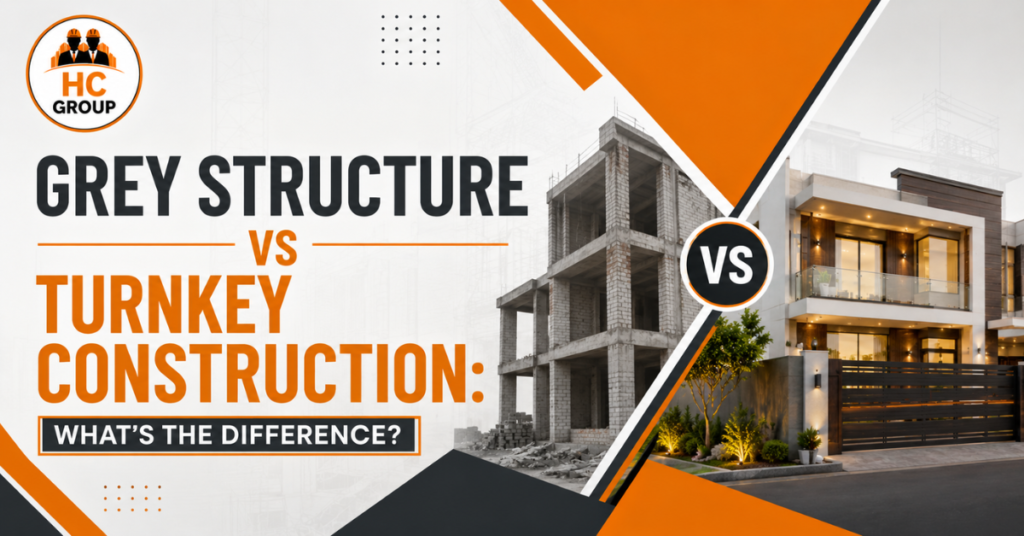
Choosing the right construction approach is one of the most important decisions before starting a residential, commercial, or architectural project. Two commonly considered options are grey structure construction and turnkey construction, and each offers a different level of involvement, cost control, and project responsibility. Understanding the difference between grey structure vs turnkey construction can help property owners select an approach that matches their budget, timeline, and desired level of control. Grey structure work generally focuses on the essential structural components of a building, while turnkey construction can cover the project from initial construction through finishing and completion. The choice can significantly affect how you manage contractors, materials, design decisions, payments, and project supervision. It is therefore important to understand exactly what is included before signing a construction agreement. Property owners should also consider their availability, technical knowledge, financing capacity, and preferred level of involvement. A clear understanding of both models can reduce confusion and help establish realistic expectations from the beginning.
What Is Grey Structure Construction?
Grey structure construction refers to the stage of building where the primary structural framework and essential components are completed, but most decorative and finishing work remains unfinished. It typically establishes the physical foundation of the property and prepares the building for subsequent finishing stages. For homeowners who want greater control over materials, interior finishes, fixtures, and design elements, grey structure construction can provide flexibility. However, the owner usually needs to coordinate or separately arrange the remaining finishing work after the structural phase is complete.
What Is Usually Included?
A grey structure package may include:
- Site preparation and excavation
- Foundation and footing work
- Columns, beams, and slabs
- Brick or block masonry
- Roof construction
- Basic plumbing and electrical conduits
- Plastering or related structural preparation
- Essential waterproofing work
- Staircase construction
- External structural elements
The exact scope can vary between contractors, so property owners should always request a detailed scope of work before construction begins.
What Is Turnkey Construction?
Turnkey construction provides a more comprehensive solution in which one contractor or construction company manages most or all stages of the project until the property is ready for use. Instead of managing separate teams for structural work, flooring, electrical systems, plumbing, painting, fixtures, and other finishing requirements, the owner can work primarily with one project manager or contractor. This approach is designed to simplify construction management and reduce the coordination burden on the client. Depending on the agreement, turnkey services can cover architectural planning, structural construction, MEP systems, interior finishes, landscaping, and final installation. A properly defined turnkey construction services agreement should clearly identify the materials, specifications, finishes, timelines, payment stages, quality standards, and responsibilities of each party. This transparency is particularly important because turnkey projects can vary significantly in scope from one contractor to another.
Grey Structure vs Turnkey Construction: Key Differences
When comparing grey structure vs turnkey construction, the biggest difference is the level of project completion and responsibility handled by the contractor. Grey structure construction generally takes the project through its primary structural stage, while turnkey construction aims to deliver a completed and usable property. This means the owner has considerably more involvement in selecting and coordinating finishing work under a grey structure model.
| Factor | Grey Structure | Turnkey Construction |
| Project scope | Structural stage | Complete project |
| Finishing work | Usually excluded | Generally included |
| Owner involvement | Higher | Lower |
| Material selection | More owner-controlled | Often contractor-managed |
| Contractor responsibility | Limited to agreed structural scope | Broader project responsibility |
| Project coordination | Often handled by owner | Mainly handled by contractor |
| Customization | High | Depends on contract |
| Convenience | Moderate | High |
| Budget control | Greater direct control | More consolidated |
| Management effort | Higher | Lower |
The right option depends on whether the owner prioritizes direct control or convenience. Grey structure vs turnkey construction should therefore not be viewed simply as a choice between cheap and expensive construction; it is a decision about scope, responsibility, flexibility, and project management.
Cost Comparison: Which Construction Option Is More Affordable?
Cost is often one of the first factors property owners consider when evaluating construction methods. Grey structure construction may appear more affordable initially because the quoted amount generally covers only the structural stage rather than the complete property. However, owners must account for the additional costs of finishing, fixtures, installations, labor, and project management that will be required afterward. Turnkey construction, on the other hand, generally involves a larger overall contract value because more services and materials are included in the package.
Factors That Influence Overall Cost
The final construction cost can depend on:
- Building size and covered area
- Structural design and complexity
- Quality of construction materials
- Flooring and wall finishes
- Doors and windows
- Electrical and plumbing specifications
- Kitchen and bathroom fittings
- Paint and decorative finishes
- HVAC and other mechanical systems
- Landscaping and external development
Therefore, the cheapest initial quotation does not necessarily represent the lowest final project cost. A detailed comparison of inclusions, exclusions, specifications, and potential additional expenses is essential before making a decision.
Project Timeline and Construction Management
Time management is another major difference when comparing grey structure vs turnkey construction. With grey structure construction, completing the structural phase may be relatively straightforward, but the overall project can take longer because finishing work must be planned and coordinated separately. Delays can occur when different contractors are hired for flooring, painting, electrical installations, cabinetry, landscaping, and other finishing activities.
Turnkey construction can streamline the process because one contractor generally coordinates multiple stages. A centralized management structure can improve communication between teams and reduce scheduling conflicts. However, the actual timeline still depends on project size, design complexity, material availability, approvals, weather conditions, and contractor efficiency.
Quality Control and Material Selection
Quality control plays a critical role in determining the durability, appearance, safety, and long-term value of a building. In a grey structure project, the owner may have greater freedom to select materials for each stage and can personally compare suppliers and specifications. This can be beneficial for clients who have construction knowledge or access to reliable technical consultants.
In a turnkey project, material selection may be managed by the contractor according to agreed specifications and budget requirements. This makes the contract particularly important because material brands, grades, finishes, and technical standards should be clearly documented. Grey structure vs turnkey construction therefore differs not only in project scope but also in how material procurement and quality monitoring are managed.
Advantages of Grey Structure Construction
Grey structure construction can be a suitable choice for property owners who want direct involvement throughout the project. It provides an opportunity to independently select finishing contractors and customize the final appearance according to personal preferences. Owners can also make decisions gradually as the project progresses instead of finalizing every finish at the beginning.
Major Benefits
Greater control: Owners can personally choose many finishing materials, fixtures, and contractors.
Flexible customization: Interior and exterior finishes can be adjusted according to individual preferences.
Supplier selection: Clients may compare different suppliers and negotiate material prices.
Stage-wise investment: Construction can be divided into structural and finishing phases.
Design freedom: Owners can make more detailed decisions about the final look and functionality.
However, these benefits come with increased responsibility because the owner must coordinate multiple construction activities and professionals.
Advantages of Turnkey Construction
Turnkey construction is particularly attractive to clients who prefer convenience and centralized project management. Instead of dealing with numerous independent contractors, the owner can assign responsibility for a broader range of work to one company. This can simplify communication and make it easier to monitor overall progress.
A turnkey approach can also provide better coordination between structural, electrical, plumbing, interior, and finishing teams when the contractor has an experienced project management system. The client can focus more on major decisions instead of handling daily construction coordination. For busy homeowners, investors, and commercial clients, this reduced management requirement can be a significant advantage.
Which Option Is Better for Your Project?
There is no universal answer when deciding between grey structure vs turnkey construction because the best option depends on the owner’s priorities and circumstances. Grey structure construction may be more suitable for clients who want maximum control over materials, finishes, suppliers, and individual contractors. It can also work well for experienced property owners who have the time and knowledge to manage the remaining construction stages.
Turnkey construction may be preferable for clients who want a streamlined process and a single point of responsibility. It is especially useful when the owner has limited time to supervise different teams or wants the property completed under one coordinated construction plan. Before choosing either approach, consider your budget, availability, technical expertise, preferred finishes, and desired completion timeline.
How to Choose the Right Construction Company
Regardless of which approach you select, choosing a reliable construction company is essential. A contractor should have relevant project experience, qualified professionals, transparent pricing, strong quality-control procedures, and a clear understanding of your requirements. Review previous projects and ask for detailed documentation rather than relying only on verbal promises.
A professional construction partner should also explain what is included and excluded from the agreement. Payment schedules, material specifications, project timelines, variation procedures, warranties, and completion standards should be documented clearly. For a turnkey project, this becomes even more important because the contractor may be responsible for a much larger portion of the construction process. Grey structure vs turnkey construction decisions become easier when the contractor provides transparent scope and realistic cost estimates.
Read more: How to Choose the Best Construction Company in Lahore
Common Mistakes to Avoid Before Starting Construction
Many construction problems occur because property owners begin work without clearly defining the project scope. Whether selecting grey structure or turnkey construction, a detailed agreement can prevent misunderstandings and unexpected expenses.
Avoid These Common Mistakes
- Choosing a contractor solely because of a low quotation
- Failing to define the scope of work
- Not checking previous construction projects
- Ignoring material specifications
- Accepting verbal commitments instead of written agreements
- Underestimating finishing and installation costs
- Not establishing a realistic construction timeline
- Making frequent design changes after construction begins
- Failing to clarify payment milestones
- Not discussing quality standards and warranties
Proper planning at the beginning can reduce costly changes and improve the overall construction experience.
Final Verdict
Ultimately, the choice between grey structure vs turnkey construction comes down to control versus convenience. Grey structure construction provides greater flexibility and allows owners to manage finishing decisions independently, but it requires more time, coordination, and involvement. Turnkey construction offers a more convenient and centralized approach, where a professional team such as HC Group can manage multiple stages from construction to completion. Neither option is automatically better for every project because the right choice depends on budget, timeline, technical knowledge, design preferences, and management capacity. Before making a decision, property owners should compare complete project costs rather than looking only at the initial quotation. They should also evaluate contractor experience, material quality, project management capabilities, and contractual terms. A carefully planned construction strategy can help minimize delays, control costs, and achieve better long-term results. By understanding the differences between these two approaches, clients can choose a construction model that aligns with their specific goals.
FAQ’s
What is the main difference between grey structure and turnkey construction?
The main difference is the project scope. Grey structure construction generally covers the primary structural components, while turnkey construction can include construction, installations, finishing, and other services required to make the property ready for use.
Which construction method gives homeowners more control?
Grey structure construction generally gives homeowners more control over finishing materials, suppliers, contractors, fixtures, and design decisions. This flexibility requires greater owner involvement and project management.
Is turnkey construction better for busy property owners?
Turnkey construction can be a convenient option for busy owners because one contractor can coordinate multiple construction stages. It reduces the need for the client to manage several independent contractors.
What should I check before signing a turnkey construction contract?
Check the complete scope of work, material specifications, brands and grades, payment schedule, project timeline, quality standards, warranties, exclusions, variation procedures, and responsibilities of both parties.
How do I decide between grey structure vs turnkey construction?
Consider your budget, desired level of involvement, available time, technical knowledge, preferred customization, and completion requirements. Comparing the complete project scope and estimated final cost can help you make a more informed decision.