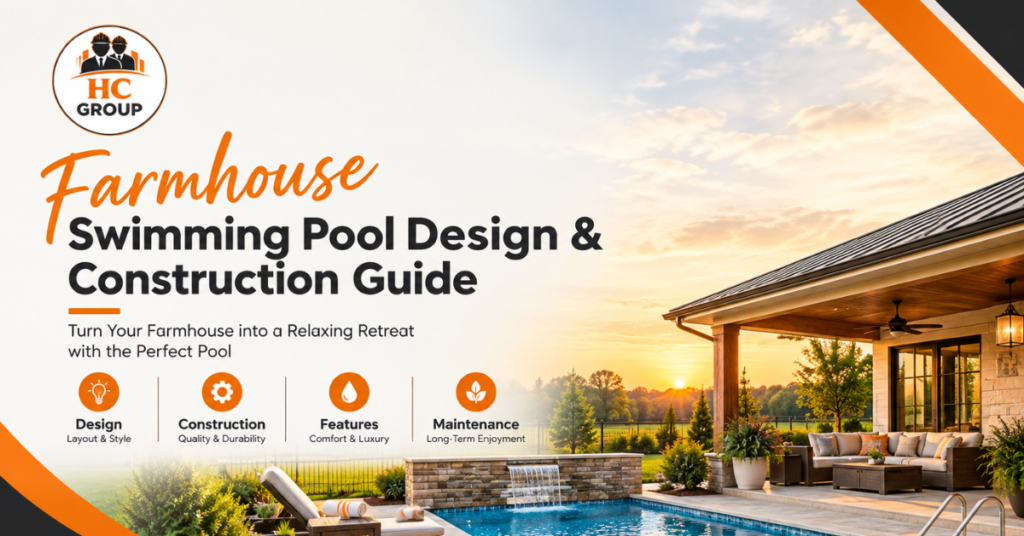
A well-planned swimming pool can transform a farmhouse into a relaxing retreat for family gatherings, outdoor entertainment, and weekend escapes. However, creating a beautiful pool requires more than choosing an attractive shape or adding decorative features. A successful farmhouse swimming pool project depends on suitable site selection, structural planning, water circulation, durable finishes, safety measures, and a realistic construction budget. The design should complement the farmhouse architecture while making the best use of available outdoor space. Factors such as soil conditions, sunlight, privacy, drainage, and access to utilities can influence both the design and long-term performance. Property owners should also consider how frequently the pool will be used and whether it will serve children, adults, guests, or recreational activities. Careful planning helps balance appearance, functionality, maintenance requirements, and overall investment. This guide explains the essential stages of designing, constructing, and maintaining a swimming pool that suits a farmhouse property.
Introduction to Farmhouse Swimming Pool Design
A thoughtfully designed farmhouse swimming pool can become the central feature of an outdoor living area, connecting the house, garden, and entertainment spaces into one cohesive environment. Some property owners prefer a minimalist rectangular pool beside a contemporary farmhouse, while others choose a natural-looking design surrounded by greenery, stone finishes, and shaded seating. The right choice depends on the property’s architectural style, available land, intended use, and preferred atmosphere. Pool placement should allow convenient access from the house without interfering with garden pathways, parking areas, or other outdoor facilities. Adequate sunlight can improve the swimming experience, while strategically placed trees, screens, and boundary features can provide privacy. It is equally important to plan the pool’s filtration equipment, plumbing routes, drainage, and maintenance access before construction begins. When these practical details are considered alongside visual design, the finished pool is more likely to remain attractive and functional over time.
Popular Farmhouse Swimming Pool Design Ideas
Different swimming pool styles can create very different experiences, from a clean architectural appearance to a resort-inspired outdoor retreat. Before selecting a design, consider the farmhouse’s overall character, the available plot, the number of users, and the amount you want to spend on construction and maintenance. A farmhouse swimming pool should combine visual appeal with practical dimensions, safe access, and an efficient circulation system. The following design options can help property owners identify a style that suits their requirements.
Modern Rectangular Swimming Pools
Rectangular pools are suitable for contemporary farmhouses because their straight lines complement modern architecture, paved decks, and symmetrical gardens. They can also make efficient use of space and accommodate swimming, exercise, and family recreation. Neutral-colored tiles, simple coping, and underwater lighting can create a refined appearance without excessive decoration.
Luxury Infinity-Edge Pools
Infinity-edge pools create the impression that water extends toward the surrounding landscape, making them attractive for properties with suitable views or changes in elevation. Their construction generally requires careful structural engineering, a balancing or collection tank, and specialized water-circulation arrangements. Because these systems can increase construction and operating costs, they should be considered during the initial design and budgeting stages.
Natural and Freeform Pool Designs
Freeform pools use curved edges and organic shapes to blend with gardens, lawns, and landscaped outdoor areas. Natural stone, textured finishes, and carefully selected plants can create a relaxed atmosphere that suits countryside properties. Plant selection should account for falling leaves, root growth, water cleanliness, and the distance between vegetation and pool equipment.
Compact Plunge Pools
A plunge pool can be an effective option when the available outdoor area is limited or the primary purpose is cooling off and relaxation rather than extended swimming. Its smaller water volume may reduce some filling and heating requirements, although filtration, sanitation, and routine cleaning are still necessary. Built-in seating, steps, and surrounding decking can improve usability without requiring a large footprint.
Family-Friendly Swimming Pools
Families may benefit from designs that include clearly defined shallow areas, comfortable entry steps, handrails, and space for supervised recreation. The pool’s depth and layout should reflect its intended use rather than relying solely on appearance. Appropriate barriers, slip-resistant surfaces, and clear sightlines from seating areas should also be included in the planning process.
How to Choose the Right Pool Location and Size
Selecting the right location is one of the most important decisions when planning a farmhouse swimming pool, because the position affects construction costs, usability, privacy, and future maintenance. The pool should be accessible from the house while leaving enough room for landscaping, outdoor seating, walkways, and other recreational activities. Sunlight exposure is another important consideration, as it can influence swimming comfort, water temperature, and the amount of shade required around the deck.
Before finalizing the layout, the property should be assessed for soil stability, groundwater conditions, drainage patterns, and possible underground utilities. Pool dimensions should reflect the number of regular users, the available space, and whether the pool is intended for relaxation, exercise, or family entertainment. Larger pools require more excavation, structural materials, water, and filtration capacity, which can increase both installation and operating expenses. A qualified designer or engineer can help establish practical dimensions and identify site constraints before construction work begins.
Important planning considerations:
- Available space: Allow room for the pool, deck, circulation paths, and service equipment.
- Ground conditions: Assess soil stability and groundwater risks before excavation.
- Sunlight and shade: Balance comfortable swimming conditions with shaded seating areas.
- Privacy: Consider boundary walls, landscaping, and the position of neighboring properties.
- Access and drainage: Provide practical access for construction equipment and plan where rainwater will flow.
- Future maintenance: Keep pumps, filters, valves, and other service points accessible.
Swimming Pool Construction Methods and Materials
The construction method determines how a pool is formed, finished, and maintained over its service life. A concrete pool offers flexibility in shape, depth, and detailing, making it suitable for customized designs, although it requires careful structural engineering, waterproofing, and finishing. Fiberglass pools are manufactured as prefabricated shells and can offer a faster installation process where transport, access, and local availability make them practical. The most appropriate option depends on site conditions, design requirements, installation expertise, and the available budget.
For a farmhouse swimming pool, materials should be selected according to their suitability for continuous water exposure, cleaning requirements, and local weather conditions. Tiles, coping, waterproofing products, and jointing materials should form a compatible system rather than being selected independently. Proper installation is essential because defects in the pool shell, plumbing penetrations, or waterproofing can lead to leaks and expensive repairs. Before approving a quotation, owners should confirm the proposed construction method, material specifications, workmanship standards, and testing procedures. Explore construction expertise and approach to delivering quality building projects.
Concrete Pool Construction
Concrete construction allows designers to create customized dimensions, steps, benches, curves, and integrated water features. However, the structural design must account for soil conditions, groundwater pressure, water loads, and other relevant engineering factors. Proper curing, waterproofing, and installation quality are critical to long-term performance.
Pool Tiles, Coping, and Waterproofing
Pool tiles contribute to the finished appearance, while coping provides a defined edge around the pool and helps create a neat transition to the deck. Waterproofing must be designed for permanent water exposure and installed according to the product manufacturer’s requirements. Suitable slip-resistant materials should be used in wet walking areas to reduce the risk of accidents.
Choosing Durable Finishes
Select finishes based on durability, comfort, cleaning requirements, appearance, and replacement costs. Light and neutral finishes can create a bright visual effect, while darker finishes may produce a deeper-looking water color depending on lighting and surrounding materials. Always review actual samples and confirm that the products are suitable for swimming pool use.
Luxury Pool Features and Customization Options
Decorative and functional features can make a pool more enjoyable, but each addition should be evaluated for its construction cost, energy use, maintenance needs, and compatibility with the overall design. A farmhouse swimming pool can be customized with lighting, water features, built-in seating, heating, or automated controls, depending on the owner’s priorities. Features that are integrated during the design stage are often easier to coordinate with the structure, plumbing, electrical installation, and surrounding landscape. Adding complex systems after construction may require extra work and can limit design options. Consider the following upgrades when developing the pool concept:
- Waterfalls and fountains: Introduce movement and sound, but require appropriate pumps, plumbing, and ongoing cleaning.
- Underwater LED lighting: Improves nighttime visibility and creates a decorative effect when properly installed.
- Built-in benches and shallow lounging areas: Provide places to sit or relax, subject to suitable depth and safety planning.
- Pool heating: Extends seasonal use but adds equipment, energy consumption, and maintenance requirements.
- Infinity edges and overflow channels: Create a premium appearance but require additional hydraulic and structural planning.
- Automated pool controls: Help manage lighting, pumps, and compatible equipment more conveniently.
- Integrated spa features: Can provide a separate relaxation area but may require dedicated circulation and temperature controls.
The best design is not necessarily the one with the greatest number of features. Prioritize upgrades that support how the pool will actually be used and that fit comfortably within the construction and operating budget.
Pool Landscaping and Outdoor Living Design
Landscaping helps connect the pool with the farmhouse and creates a more inviting environment for relaxation and entertainment. The surrounding area should be planned as part of the overall design rather than treated as an additional decorative project after construction. Plants, paving, outdoor furniture, lighting, and shaded seating can all contribute to a cohesive appearance. At the same time, the landscape must support safe movement and convenient access to the pool. A farmhouse swimming pool surrounded by suitable planting and well-designed outdoor living spaces can create a resort-like atmosphere without compromising functionality. Plant species should be chosen carefully to minimize excessive leaf litter, invasive roots, and debris entering the water. Paving materials should provide suitable slip resistance and remain comfortable underfoot in hot weather. A coordinated landscape plan can also help manage surface drainage and make the outdoor space easier to maintain.
Poolside Plants and Garden Design
Choose plants that suit the local climate and require a manageable level of maintenance. Keep shrubs and trees positioned so that their roots, branches, and fallen leaves do not interfere with the pool shell, circulation equipment, or water quality. Use planting beds to frame views while maintaining clear access around the pool.
Decking, Patios, and Walkways
Pool decking should provide a stable, slip-resistant surface with suitable drainage. Stone, concrete pavers, and purpose-designed outdoor tiles can all be considered according to the design, budget, and site conditions. Walkways should connect the pool to the house, changing areas, and seating spaces without creating unnecessary obstacles.
Pergolas and Outdoor Seating
Pergolas, cabanas, shaded lounges, and outdoor dining areas can make the poolside more useful throughout the day. Position seating where adults can comfortably supervise swimmers while enjoying the outdoor space. Weather-resistant furniture and appropriately rated outdoor lighting can help reduce maintenance and improve usability.
Pool Filtration, Plumbing, and Water Management
A pool’s performance depends on more than its visible finish; the circulation and treatment systems are essential for maintaining clean, clear water. The pump moves water through the filtration system, where suspended particles are removed before the water returns to the pool. A suitable sanitation process is also required to control microorganisms and maintain safe water conditions. Equipment should be sized according to pool volume, expected use, plumbing layout, and the manufacturer’s specifications. For a farmhouse swimming pool, the equipment area should be planned with adequate ventilation where needed, drainage, weather protection, and enough space for servicing. Plumbing routes should be coordinated with structural work to avoid unnecessary penetrations or difficult future repairs. Owners should also consider water supply, backwashing or filter-cleaning requirements, and the responsible disposal of wastewater. Routine water testing and equipment inspections help identify problems before they affect the swimming experience.
Key components to plan include:
- Pool pump: Circulates water through the filtration and treatment system.
- Filter: Removes suspended particles using an appropriate filtration medium.
- Sanitation system: Maintains water hygiene through a suitable treatment method.
- Pipes and fittings: Carry water between the pool, pump, filter, and return points.
- Skimmers and drains: Support water collection and circulation when designed and installed appropriately.
- Control equipment: May manage pump schedules, lighting, heating, or compatible automated functions.
The equipment layout should be reviewed before construction so that the pool shell, pipework, electrical systems, and maintenance access work together efficiently.
Swimming Pool Safety and Essential Design Considerations
Safety should be incorporated into the design, construction, and day-to-day management of the pool. This is especially important on farmhouse properties where children, family members, and visitors may use the outdoor area. Safe access, clear visibility, suitable surfaces, and appropriate barriers can reduce foreseeable risks. The pool depth and entry arrangements should be designed for the intended activities, with shallow and deep zones clearly understood by users. Electrical equipment must be installed with suitable protective measures and in accordance with applicable codes and professional requirements. A farmhouse swimming pool should also have a practical maintenance plan that keeps safety equipment, access routes, and surrounding surfaces in good condition. No single safety feature can eliminate every hazard, so physical safeguards should be supported by supervision and responsible use.
Essential safety checklist:
- Install suitable barriers or controlled-access measures, particularly where children may be present.
- Use slip-resistant finishes around wet walking areas.
- Provide safe steps, handrails, and clearly identifiable entry and exit points.
- Ensure pool depth and diving restrictions are appropriate and clearly communicated.
- Have electrical installations and pool equipment assessed by qualified professionals.
- Keep rescue equipment accessible and establish clear emergency procedures.
- Maintain clear sightlines around the pool and avoid leaving children unsupervised.
- Inspect the pool surround, fittings, and access points regularly for damage or hazards.
Applicable local building, electrical, and pool-safety requirements should be checked before construction and before the pool is put into use.
Farmhouse Swimming Pool Construction Cost and Budget Planning
The cost of building a pool depends on its dimensions, depth, construction method, finishing materials, equipment, and site conditions. A simple design with standard finishes will generally require a different budget from a custom pool with an infinity edge, premium tiles, water features, and advanced automation. Excavation, soil stabilization, structural reinforcement, waterproofing, plumbing, filtration, and electrical work can all contribute significantly to the total project cost. Landscaping, decking, outdoor showers, changing areas, and seating structures may also need separate budget allowances. When estimating the cost of a farmhouse swimming pool, property owners should distinguish between the initial construction price and the ongoing expenses of cleaning, water treatment, electricity, and repairs. A detailed quotation should identify the scope of work, materials, equipment specifications, exclusions, and payment milestones. It is also sensible to reserve a contingency for unforeseen ground conditions or approved design changes. Comparing quotations on a like-for-like basis can help owners evaluate value rather than choosing a contractor solely because the initial price is lower.
Main Factors That Affect Pool Construction Costs
- Size and depth: Larger pools generally require more excavation, structural materials, water, and filtration capacity.
- Ground conditions: Difficult soil, groundwater, restricted access, or additional excavation requirements may increase costs.
- Construction method: Concrete construction and prefabricated pool systems have different installation requirements.
- Finishes and features: Premium tiles, infinity edges, heating, lighting, and water features can raise the budget.
- Mechanical equipment: Pumps, filters, sanitation systems, plumbing, and automation affect initial and ongoing expenses.
- Surrounding development: Decking, landscaping, fencing, and outdoor amenities may represent a substantial part of the overall project.
| Budget category | What to include |
| Site preparation | Surveying, excavation, soil assessment, and ground preparation |
| Structural construction | Reinforcement, concrete or pool shell, and related structural work |
| Waterproofing and finishes | Waterproofing system, tiles, coping, and interior finish |
| Mechanical and electrical | Pumps, filtration, plumbing, lighting, and controls |
| External works | Decking, landscaping, walkways, barriers, and seating |
| Ongoing expenses | Electricity, water treatment, cleaning, inspections, and repairs |
Request a site-specific estimate before committing to a design, because actual costs depend on the location, specifications, labour rates, and material availability. If you are also planning other construction work on the property, coordinate the pool budget with the wider project budget to avoid unexpected financial pressure.
Step-by-Step Farmhouse Swimming Pool Construction Process
A well-organized construction process helps ensure that design decisions, technical installations, and finishing work are coordinated correctly. Before work begins, the owner should establish the intended pool use, approximate budget, preferred appearance, and project requirements. The designer and relevant technical professionals can then assess the site and prepare suitable drawings and specifications. Approvals, where required, should be confirmed before excavation or structural work begins. During construction, each stage should be inspected before the next one covers or depends on the completed work. This is particularly important for reinforcement, embedded fittings, plumbing, and waterproofing, because defects can become difficult and expensive to correct later. A clearly defined schedule also helps coordinate contractors, material deliveries, equipment installation, and external landscaping. At handover, the owner should receive operating instructions and understand the maintenance requirements of the completed pool.
Key Construction Stages
- Site inspection and planning: Assess available space, soil conditions, drainage, access, and utility connections.
- Design and engineering: Finalize dimensions, depth, structural requirements, finishes, circulation, and equipment locations.
- Budget and approvals: Confirm specifications, obtain applicable approvals, and agree on the scope, cost, and timeline.
- Excavation and structural work: Prepare the ground and construct the pool shell according to approved engineering details.
- Plumbing and electrical installation: Install the required pipework, fittings, circulation components, and electrical systems.
- Waterproofing and finishing: Complete the specified waterproofing system, tiles or interior finish, and pool-edge details.
- Equipment commissioning: Test circulation, filtration, sanitation, lighting, and other installed systems.
- Final inspection and handover: Check workmanship, resolve identified defects, balance the water, and explain operation and maintenance.
For best results, owners should maintain written records of design approvals, material specifications, inspections, variations, and equipment warranties throughout the project.
Swimming Pool Maintenance and Long-Term Care
Regular maintenance protects water quality, helps preserve the pool’s finish, and allows equipment problems to be identified early. The maintenance routine should include surface cleaning, water testing, filter care, pump inspections, and checks for leaks or visible deterioration. Water chemistry needs to remain within the ranges recommended for the pool’s sanitation system and equipment, rather than being adjusted based on appearance alone. Leaves, dust, and other debris may accumulate more quickly in outdoor pools surrounded by gardens or open land. Owners should also check the pool deck, coping, joints, ladders, and other fittings for signs of wear or damage. Pumps and filters should be serviced according to manufacturer guidance, while any unusual noise, reduced circulation, or persistent water loss should be investigated. A maintenance schedule makes these tasks easier to manage and can reduce the likelihood of expensive repairs caused by neglect. Keeping records of water tests, cleaning, servicing, and repairs can also help establish a useful maintenance history.
| Frequency | Suggested maintenance tasks |
| Daily or as needed | Remove floating debris, check water appearance, and inspect the pool area for hazards |
| Weekly | Test water chemistry, clean surfaces, empty baskets, and check circulation |
| Monthly or as recommended | Inspect equipment operation, fittings, and accessible pipework for signs of problems |
| Periodically | Service equipment, inspect finishes and waterproofed areas, and review the overall maintenance plan |
A properly maintained pool is more likely to provide a reliable and comfortable swimming experience over the long term. Maintenance requirements will vary with usage, weather, surrounding vegetation, water quality, and the type of equipment installed.
Read More: Swimming Pool Renovation Guide: When and Why You Should Upgrade
How to Choose the Right Swimming Pool Design and Construction Company
Choosing a qualified contractor is essential because swimming pool projects involve structural work, waterproofing, plumbing, electrical systems, and specialist finishing. Property owners should review previous projects to understand the contractor’s experience with similar pool sizes, design styles, and site conditions. It is useful to ask for a clearly itemized quotation rather than relying on a single total price without supporting details. The proposal should explain the construction method, materials, equipment specifications, project stages, estimated timeline, and exclusions. Before signing an agreement, clarify who is responsible for design coordination, site supervision, quality checks, and any required approvals. A reliable contractor should also explain how defects will be handled and what warranties or after-sales support are available. For a farmhouse swimming pool, the contractor should understand how the pool integrates with the wider property, including landscaping, drainage, outdoor access, and service areas. Taking time to compare experience, communication, documentation, and technical capability can help owners make a more informed decision.
Review Previous Projects
Ask to see completed pools and, where possible, examples that resemble your intended design. Look closely at the finish quality, pool edges, surrounding deck, equipment arrangement, and integration with the landscape.
Compare Detailed Quotations
Check whether the quotations cover equivalent materials, equipment, construction stages, testing, and finishing work. Clarify provisional allowances, exclusions, variation procedures, and payment milestones before making a decision.
Confirm Technical Expertise
A swimming pool requires coordination between structural design, waterproofing, plumbing, filtration, and electrical installation. Confirm that the appropriate qualified professionals are involved and that technical specifications will be documented.
Understand Timelines and Aftercare
Ask for an estimated construction schedule and discuss factors that could affect completion. Confirm what documentation, equipment instructions, warranty information, and maintenance guidance will be provided at handover.
If you are planning a pool for your property, HC Group can be considered as a starting point for discussing your construction requirements, design preferences, and project scope. Visit the contact page to enquire about your project.
FAQ’s
How much does it cost to build a farmhouse swimming pool?
The cost depends on the pool’s dimensions, depth, construction method, finishes, filtration equipment, and surrounding landscaping. Features such as heating, waterfalls, infinity edges, and automation can increase the budget. A site inspection and detailed specification are the best starting points for obtaining a reliable estimate.
Which swimming pool design is best for a farmhouse?
The best design depends on the property’s architecture, available space, intended use, and budget. Rectangular pools suit contemporary settings, while freeform designs can blend naturally with gardens and landscaped grounds. Infinity-edge and plunge pools may also work well where the site and intended use support their requirements.
How much space is required for a farmhouse swimming pool?
The required space depends on the pool’s dimensions and the additional room needed for decking, circulation paths, safety barriers, landscaping, and equipment access. Owners should assess the entire pool area rather than measuring only the water surface. A designer can recommend a practical layout based on the plot and intended activities.
How long does swimming pool construction take?
The timeline varies according to the design, construction method, site conditions, approvals, weather, and availability of materials and equipment. Custom concrete pools generally require coordination across several structural and finishing stages. A contractor should provide a project-specific schedule that includes testing and commissioning.
Which materials are best for a durable swimming pool?
Suitable materials depend on the construction method, engineering requirements, local conditions, and maintenance expectations. Structural materials must be properly specified, while waterproofing, pool finishes, coping, and jointing products must be suitable for their intended applications. Correct installation is just as important as the quality of the materials themselves.
How can I reduce swimming pool maintenance costs?
Choose appropriately sized equipment, use durable finishes, maintain balanced water chemistry, and clean the pool regularly. Efficient pumps and well-planned circulation may help manage energy use, depending on the system and operating schedule. Promptly addressing leaks, damaged fittings, and equipment problems can help prevent more expensive repairs.