
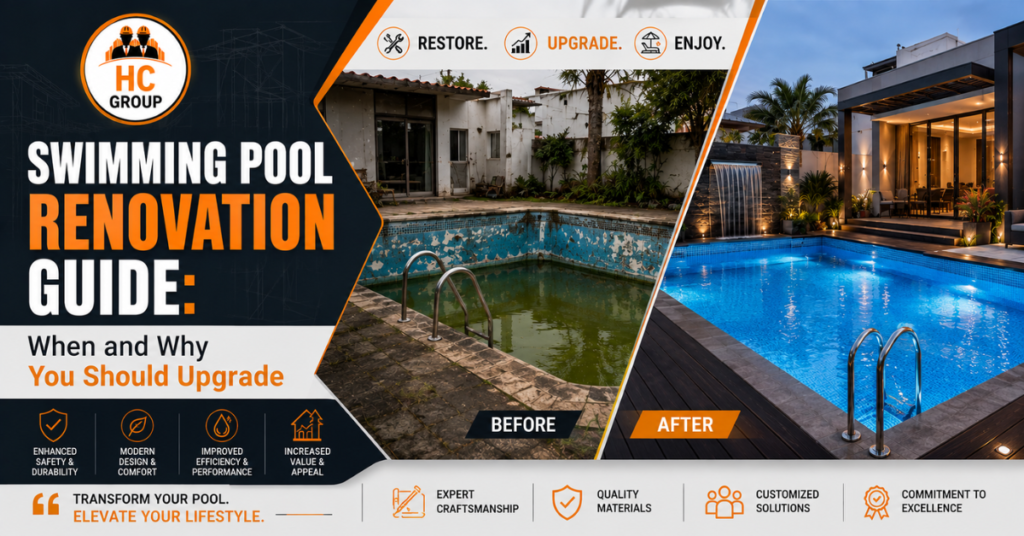
A well-designed swimming pool can remain an important feature of a home, hotel, sports facility, or recreational property for many years. However, constant exposure to water, chemicals, sunlight, changing temperatures, and regular use can gradually affect its surfaces, equipment, plumbing, and surrounding areas. When cracks, faded tiles, inefficient filtration, poor lighting, or recurring maintenance problems begin appearing, simply repairing individual issues may no longer provide the best long-term solution. Swimming pool renovation offers an opportunity to restore an aging pool while improving its appearance, safety, functionality, and operating efficiency. Modern renovation can include everything from resurfacing and pool tile replacement to new filtration systems, LED lighting, heating, automation, and upgraded surrounding spaces. The goal is not always to completely rebuild an existing pool but to identify which components need improvement and which can continue to perform effectively. A carefully planned upgrade can also help property owners introduce contemporary design elements without losing the value of the existing structure. For this reason, understanding when and why to renovate is essential before investing in any pool improvement project.
When Is It Time to Renovate Your Swimming Pool?
The need for swimming pool renovation usually becomes apparent when a pool begins showing multiple signs of age, deterioration, inefficiency, or outdated design. Some problems are purely cosmetic, such as faded finishes and old tiles, while others can affect safety, water quality, structural performance, and operating costs. A pool that requires frequent repairs may indicate that several interconnected components are reaching the end of their useful life. Persistent water loss can also point toward plumbing, waterproofing, or structural issues that should be professionally assessed. Older pumps and filtration systems may consume more energy while providing less efficient circulation than modern alternatives. Changes in how the property is used can also create a reason to upgrade, such as adding heating for extended seasonal use or improved lighting for nighttime swimming. Before deciding on major work, an inspection should evaluate the pool shell, plumbing, drainage, surfaces, equipment, electrical systems, and surrounding areas. This assessment helps distinguish between minor repairs and improvements that justify a broader renovation.
Common Reasons for an Upgrade
Aging Pool Surfaces
Rough, stained, cracked, or deteriorating surfaces can affect both appearance and swimmer comfort.
Outdated Equipment
Old pumps, filters, heaters, and control systems can increase maintenance requirements and operating expenses.
Damaged Tiles and Coping
Loose or broken tiles and deteriorated coping can create safety concerns while making the pool look neglected.
Poor Water Circulation
Inadequate circulation can contribute to inconsistent water quality, excessive chemical use, and maintenance difficulties.
Signs Your Pool Needs an Upgrade
Before starting a project, property owners should look for visible and functional warning signs. Recognizing these problems early can help prevent small defects from becoming more complicated and expensive repairs.
Important signs include:
- Cracked or deteriorating pool surfaces
- Loose, broken, or faded tiles
- Damaged pool coping
- Persistent water leakage
- Outdated filtration equipment
- Frequent pump or heater breakdowns
- Poor water circulation
- Inefficient pool lighting
- Damaged surrounding decking
- Slippery walking surfaces
- Recurring maintenance problems
- Outdated pool appearance
- Poor drainage around the pool
- Unsafe or uncomfortable pool access
When several of these issues appear together, a professional assessment can determine whether isolated repairs are sufficient or a comprehensive upgrade would offer greater long-term value.
Why Renovating an Existing Pool Can Be a Smart Investment
A properly planned swimming pool renovation can improve more than the visual appearance of an aging facility. Upgrading surfaces and finishes can make the pool more comfortable and attractive, while equipment improvements can support better water circulation and easier maintenance. Modern LED lighting can improve visibility after sunset while creating a more appealing atmosphere around the pool. Replacing damaged coping and decking can also improve safety for swimmers and visitors. In addition, renovation allows property owners to adapt an older pool to current lifestyle requirements without necessarily constructing an entirely new facility.
Another advantage is flexibility. Renovation can be completed as a comprehensive project or divided into priority stages depending on the property’s requirements and available budget. For example, structural repairs and waterproofing can be addressed first, followed by resurfacing, tile replacement, equipment upgrades, and decorative improvements. This approach allows owners to focus investment on the areas that provide the greatest practical benefit. The existing pool layout can often be preserved while selected features are modernized to create a substantially improved facility. For property owners considering an upgrade, pool renovation and upgrading services can help modernize an existing facility while improving its functionality, safety, and visual appeal.
Popular Swimming Pool Renovation Ideas
Modern pool upgrades combine aesthetic improvements with functional enhancements. Instead of focusing on one component, property owners can create a coordinated design that improves the entire pool environment.
Pool Resurfacing
Pool resurfacing can restore a worn interior and provide a smoother, cleaner finish. The appropriate surface should be selected according to durability, appearance, maintenance requirements, water conditions, and expected usage.
Pool Tile Replacement
New tiles can dramatically change the character of an existing pool. Mosaic, glass, ceramic, and other suitable pool finishes can be used for waterlines, steps, borders, and decorative areas.
Coping Replacement
Coping protects the pool edge while creating a visual transition between the water and surrounding deck. Replacing damaged coping can improve safety, appearance, and long-term durability.
Pool Deck Improvement
The surrounding deck should complement the pool while providing a safe and comfortable walking surface. Renovation may include replacing damaged materials, improving drainage, or introducing more contemporary finishes.
Modern Pool Features
Depending on available space, renovation may also incorporate:
- Tanning ledges
- Waterfalls
- Fountains
- Attached spas
- Decorative water features
- Built-in seating
- Modern LED lighting
- Improved landscaping
The best combination depends on the existing structure, intended use, available space, and maintenance expectations.
Pool Equipment and Technology Upgrades
One of the most practical aspects of swimming pool renovation is upgrading equipment that affects everyday performance. A pool can have an attractive new appearance but still operate inefficiently if its pump, filtration system, heater, or lighting remains outdated. Modern circulation equipment can improve water movement, while efficient filtration systems help maintain cleaner and more consistent water quality. Pool heating systems can extend the usable swimming season, particularly when the facility is expected to operate beyond the warmer months. LED lighting can provide better nighttime illumination while enhancing the visual appearance of the pool area.
Equipment Worth Considering
- Energy-efficient circulation pumps
- Modern filtration systems
- Pool heating systems
- LED underwater lighting
- Automated pool controls
- Water-quality monitoring systems
- Improved drainage and circulation components
- Modern chemical management systems
The right equipment should be selected according to pool size, usage frequency, climate, existing plumbing, energy requirements, and maintenance objectives. Integrating equipment upgrades with other renovation work can also reduce the need to reopen finished areas later.
Swimming Pool Renovation Cost: What Determines the Budget?
The cost of swimming pool renovation cannot be determined accurately from pool size alone because the condition and scope of the existing facility have a major impact on the final budget. A simple project involving resurfacing and tile replacement will have different requirements from a comprehensive renovation involving structural repairs, new plumbing, filtration, heating, lighting, decking, and water features. Material selection is another important factor, as premium tiles, finishes, equipment, and fixtures can increase initial investment while potentially offering improved durability and appearance. Labor requirements also vary depending on accessibility, pool design, project complexity, and the amount of existing material that needs to be removed.
Major Cost Factors
- Pool dimensions and existing condition
- Resurfacing requirements
- Tile and coping selection
- Waterproofing and structural repairs
- Plumbing modifications
- Filtration and circulation equipment
- Pool heating
- Lighting systems
- Decking and surrounding surfaces
- Water features
- Landscaping
- Electrical requirements
- Labor and installation complexity
Property owners should request a detailed quotation that clearly separates materials, labor, equipment, repairs, and finishing work. Comparing quotations based only on the lowest price can result in unexpected costs later, so the focus should remain on specifications, durability, workmanship, and overall project value.
Swimming Pool Renovation vs. Building a New Pool
Not every old pool needs to be demolished and rebuilt. If the existing shell and major structural components remain sound, upgrading selected areas can provide a more practical solution. Renovation can preserve the existing layout while improving surfaces, equipment, lighting, plumbing, and surrounding features. A completely new pool may be more appropriate when the existing structure has serious defects, the layout no longer meets the owner’s requirements, or extensive structural modifications are necessary.
| Factor | Renovation | New Pool Construction |
| Existing structure | Retained where suitable | Completely new |
| Design flexibility | Moderate to high | Very high |
| Construction scope | Targeted or comprehensive | Complete |
| Disruption | Usually lower | Usually higher |
| Equipment upgrades | Possible | Designed into new system |
| Best suited for | Structurally sound pools | Major structural or layout changes |
The decision should be based on a professional assessment rather than appearance alone. In some cases, a comprehensive upgrade can achieve many of the benefits of a new pool while preserving a structurally sound existing facility.
The Swimming Pool Renovation Process
A successful project requires proper sequencing because different renovation activities depend on one another. Planning everything before work begins can reduce delays, prevent unnecessary rework, and make it easier to coordinate structural, technical, and finishing tasks.
Step 1: Inspection and Assessment
The pool shell, surfaces, plumbing, drainage, filtration, lighting, and surrounding areas are evaluated.
Step 2: Renovation Planning
Required repairs and desired improvements are prioritized according to condition, functionality, design, and budget.
Step 3: Design and Material Selection
Tiles, finishes, coping, equipment, lighting, and additional features are selected according to performance and aesthetic requirements.
Step 4: Preparation and Repairs
The pool is prepared, damaged materials are removed, and structural, plumbing, or waterproofing issues are addressed.
Step 5: Surface and Finishing Work
Resurfacing, tiling, coping, decking, and related finishing work are completed.
Step 6: Equipment Installation
Pumps, filters, heaters, lighting, automation, and other systems are installed and connected.
Step 7: Testing and Handover
Water circulation, filtration, lighting, equipment, drainage, safety, and overall operation are tested before completion.
A structured process helps ensure that the finished pool performs as well as it looks.
How to Choose a Swimming Pool Renovation Contractor
Choosing the right contractor can have a major impact on the quality and durability of the finished project. Look for a team with experience in pool construction as well as renovation, because upgrading an existing facility often requires understanding how old structural and mechanical systems interact with new components. A reliable contractor should be able to inspect the existing pool, explain the required work, recommend suitable materials, and provide a transparent quotation. Reviewing previous pool projects can help assess workmanship, finishing quality, design capability, and technical expertise. It is also important to clarify timelines, payment stages, material specifications, warranties, and responsibilities before work begins.
For a professional project, the contractor should maintain quality control throughout the process rather than focusing only on the final appearance. HC Group provides swimming pool solutions covering design, construction, renovation, filtration, tiling and finishing, maintenance, lighting, equipment installation, and heating systems. This broad service approach can help clients coordinate multiple requirements through a planned project rather than managing unrelated contractors for every stage.
Benefits of a Professionally Renovated Pool
A carefully executed swimming pool renovation can provide several long-term benefits for residential and commercial properties. Improved surfaces can enhance appearance and swimmer comfort, while upgraded equipment can support more efficient operation and water management. Better lighting can improve nighttime visibility and create a more attractive environment for entertainment and relaxation. Repaired coping, steps, decking, and access areas can also address safety concerns that may have developed over time. Modern finishes can make the pool easier to maintain and help create a more contemporary appearance that complements the surrounding architecture and landscaping.
Renovation can also extend the useful life of an existing pool by addressing problems before they become major failures. Instead of allowing damaged surfaces, inefficient equipment, or recurring leaks to continue creating maintenance costs, owners can address multiple issues through a coordinated improvement plan. The result should be a pool that is safer, more functional, visually appealing, and better suited to its intended use. The exact benefits will depend on the condition of the existing facility and the scope of work selected. Learn more about our experience and expertise to understand the professional approach behind quality construction and renovation projects.
Final Thoughts
For property owners dealing with an aging, inefficient, or outdated pool, swimming pool renovation can provide an effective way to improve performance without automatically replacing the entire facility. The best projects begin with a detailed inspection that identifies structural, mechanical, safety, and aesthetic requirements. From resurfacing and tile replacement to filtration, heating, lighting, and modern features, improvements can be prioritized according to actual needs and budget. A professional approach also ensures that new systems work properly with the existing structure rather than creating compatibility problems later. Property owners should compare complete project scopes instead of choosing a contractor based solely on the lowest quotation. Material quality, technical expertise, waterproofing, installation standards, project management, and after-service support should all be considered. When properly planned and executed, a renovated pool can provide improved usability, appearance, safety, and long-term value. Whether the goal is to modernize a residential pool or upgrade a larger recreational facility, investing in the right improvements can transform an aging space into a more attractive and functional environment.
FAQ’s
What are the main signs that a swimming pool needs renovation?
Cracked surfaces, damaged tiles, leaking areas, outdated equipment, poor circulation, inefficient lighting, deteriorating decking, and frequent maintenance issues are common signs. A professional inspection can determine whether repairs or a complete upgrade is more appropriate.
How often should a swimming pool be renovated?
There is no fixed renovation schedule because pool lifespan depends on construction quality, materials, climate, usage, and maintenance. Regular inspections can help identify when surfaces, equipment, or structural components require attention.
Is renovating an existing pool better than building a new one?
If the existing pool structure is sound, renovation can be a practical alternative to complete replacement. However, major structural problems or significant layout changes may make new construction more suitable.
What can be upgraded during a pool renovation?
Common upgrades include pool resurfacing, tile replacement, coping, decking, filtration systems, pumps, heaters, LED lighting, automation, drainage, water features, and landscaping.
How much does pool renovation cost?
The cost varies according to pool size, structural condition, materials, equipment, labor, plumbing, finishes, and the scope of improvements. A detailed site assessment and project quotation are recommended before setting a final budget.
Can pool equipment be upgraded without rebuilding the pool?
Yes. Pumps, filtration systems, heaters, lighting, and automation can often be upgraded while retaining the existing pool structure. Compatibility with existing plumbing and electrical systems should be assessed before installation.