Sports facilities have become an essential part of modern urban development as communities, educational institutions, and commercial investors increasingly focus on fitness, recreation, and professional athletic infrastructure. Effective sports complex planning is crucial for creating functional, safe, and future-ready facilities that can accommodate different sports activities while providing a comfortable experience for athletes and spectators. From football stadiums and cricket grounds to indoor arenas and aquatic centers, modern sports complexes require strategic planning, innovative architecture, and efficient resource management to ensure long-term operational success.
Importance of Proper Sports Complex Planning
Proper sports complex planning plays a vital role in ensuring that sports facilities remain functional, accessible, and capable of supporting different athletic and recreational activities efficiently. A well-planned sports complex improves operational flow, enhances user experience, and minimizes future maintenance challenges through reliable professional sports infrastructure solutions.
- Improves athlete and visitor accessibility
- Enhances safety and crowd management
- Supports multi-sport functionality
- Increases long-term operational efficiency
- Maximizes investment value and usability
- Improves spectator comfort and facility management
- Allows future expansion and infrastructure upgrades
Understanding the Purpose of a Sports Complex
Modern sports complexes are designed for multiple purposes, ranging from professional competitions and community recreation to commercial entertainment and athletic training. Understanding the intended purpose of the facility helps determine design requirements, infrastructure planning, and space allocation.
Professional Sports Facilities
Professional sports complexes are designed to host tournaments, competitive matches, and large-scale sporting events with advanced spectator and athlete facilities.
Community Recreation Centers
Community-focused sports complexes encourage public fitness activities, recreational sports, and social engagement for all age groups.
Educational and Training Facilities
Schools, colleges, and sports academies use sports complexes for athletic training, physical education, and skill development programs.
Commercial Sports and Entertainment Venues
Modern sports complexes also function as entertainment destinations featuring gyms, food courts, retail spaces, and event management areas.
Site Selection and Location Analysis
Site selection is one of the most critical stages in sports complex planning because it directly affects accessibility, future expansion, infrastructure development, and overall project success. A strategically selected location ensures smooth transportation access, proper utility connections, and better convenience for athletes, staff, and spectators. Developers must evaluate factors such as road connectivity, surrounding population density, environmental conditions, parking availability, and land topography before finalizing a project site.
Proper location analysis also helps identify potential challenges related to drainage systems, environmental impact, zoning regulations, and traffic management. Sports complexes built in accessible urban or suburban locations generally attract higher visitor engagement and improve operational sustainability. Large-scale sports infrastructure projects also require sufficient land area to accommodate outdoor facilities, spectator seating, support buildings, and future expansion opportunities. Professional project planning teams often conduct feasibility studies and site assessments to ensure efficient land utilization and long-term facility performance.
Key Architectural Elements in Sports Complex Design
Modern sports complex architecture focuses on balancing functionality, safety, visual appeal, and operational efficiency through innovative planning and engineering. You can discover our professional approach to large-scale construction and infrastructure development.
- Stadium seating arrangements for better visibility
- Indoor and outdoor sports facility integration
- Proper ventilation and climate control systems
- Emergency exits and safety compliance planning
- Spectator circulation and accessibility management
- Locker rooms, lounges, and support facilities
- Energy-efficient lighting and infrastructure systems
Proper architectural planning improves user comfort, enhances operational flow, and ensures the sports complex can handle large visitor capacities efficiently.
Indoor vs Outdoor Sports Facility Planning
Choosing between indoor and outdoor sports facilities depends on project goals, climate conditions, maintenance requirements, and available land area. Both types of facilities offer unique operational and design advantages in sports complex planning.
| Feature | Indoor Facilities | Outdoor Facilities |
| Weather Conditions | Controlled environment | Weather-dependent |
| Construction Cost | Higher infrastructure cost | Flexible budget options |
| Maintenance | Higher utility management | Easier ventilation systems |
| Sports Flexibility | Multi-purpose adaptability | Large-scale playing areas |
| User Experience | Year-round usability | Open outdoor atmosphere |
Indoor sports facilities are ideal for all-season activities and controlled environments, while outdoor facilities provide greater flexibility for large-scale sports and spectator experiences.
Essential Sports Facilities to Include
A successful sports complex should include multiple facilities that support different athletic activities, recreational needs, and spectator requirements. The selection of facilities depends on the project scale, target audience, and intended operational purpose.
Football and Cricket Grounds
Large outdoor playing fields are essential for hosting competitive matches, tournaments, and training activities.
Swimming Pools and Aquatic Centers
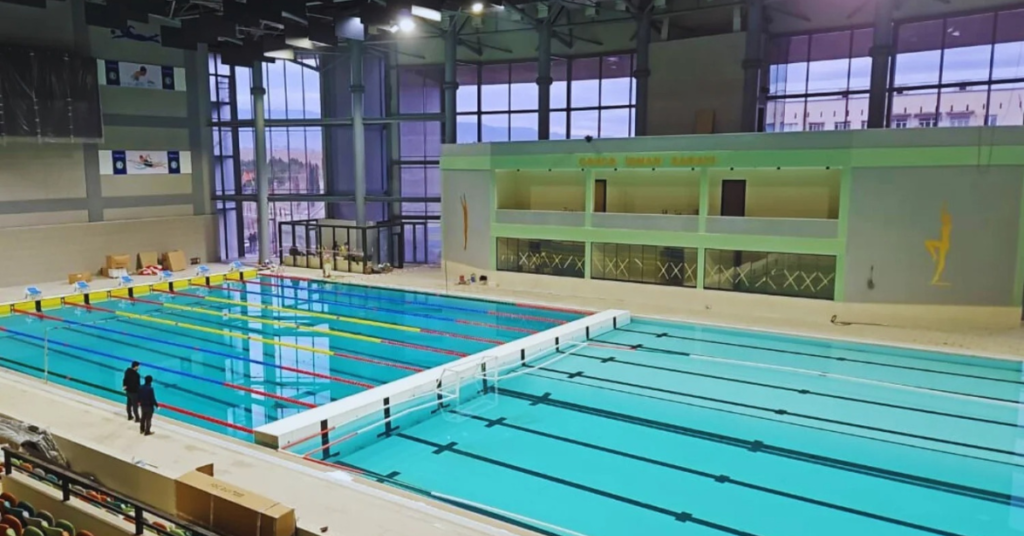
Modern aquatic facilities support recreational swimming, athletic training, and professional water sports events.
Basketball and Tennis Courts
Indoor and outdoor courts increase sports diversity and improve facility utilization throughout the year.
Fitness Gyms and Training Areas
Dedicated fitness spaces help athletes improve performance while supporting public health and wellness programs.
Spectator Seating and Food Courts
Comfortable seating, dining areas, and recreational zones improve visitor experience during sporting events.
Importance of Safety and Accessibility Standards
Safety and accessibility are among the most important factors in sports complex planning because sports facilities often accommodate large crowds, athletes, staff members, and visitors simultaneously. Proper safety measures reduce risks, improve emergency response capabilities, and ensure compliance with modern building standards.
- Fire safety and alarm systems
- Emergency evacuation routes and exits
- Wheelchair accessibility and ramps
- Slip-resistant flooring and pathways
- Crowd management and security systems
- Medical and first-aid facilities
Accessibility-focused sports facilities create inclusive environments while improving convenience and safety for all users.
Smart Technology in Modern Sports Complexes
Technology integration has become a major trend in modern sports complex planning because it improves operational efficiency, user convenience, and facility management. Smart sports infrastructure allows operators to monitor energy usage, security systems, and visitor experiences more effectively.
Smart Lighting and Energy Systems
Automated lighting systems reduce electricity consumption while improving visibility and ambiance during sporting events.
Digital Ticketing and Security Systems
Advanced entry management systems improve crowd control, security monitoring, and event organization.
Automated Climate Control
Smart HVAC systems maintain comfortable indoor temperatures while improving energy efficiency.
High-Speed Connectivity and Digital Screens
Modern sports complexes use digital displays and high-speed internet systems to enhance communication and spectator engagement.
Sustainable Sports Complex Design Trends
Sustainability has become an essential component of sports complex planning as developers increasingly focus on environmentally responsible construction methods and energy-efficient infrastructure. Eco-friendly sports facilities reduce operational costs while improving environmental performance and long-term project sustainability. Features such as solar energy systems, rainwater harvesting, LED lighting, and sustainable landscaping are commonly integrated into modern sports complex designs.
Green building materials and energy-efficient ventilation systems also contribute to lower maintenance costs and improved environmental impact management. Sustainable sports complexes create healthier environments for athletes and visitors while aligning with modern environmental regulations and global sustainability goals. Construction companies like HC Group prioritize innovative and environmentally conscious construction solutions that improve long-term operational performance and resource efficiency.
Budget Planning and Construction Cost Factors
Proper budget planning is essential in sports complex planning because large-scale sports infrastructure projects involve significant investment and long-term operational expenses. Accurate cost estimation helps prevent financial overruns while ensuring construction quality and project efficiency.
| Cost Factor | Impact on Budget |
| Land Acquisition | Initial project investment |
| Construction Materials | Structural durability and quality |
| Smart Technology Systems | Advanced operational costs |
| Seating Capacity | Infrastructure and space requirements |
| Utility and Maintenance Systems | Long-term operational expenses |
| Landscaping and Parking | Additional development costs |
Careful financial planning allows developers to balance functionality, quality, and long-term profitability effectively.
Common Mistakes to Avoid in Sports Complex Planning
Many sports infrastructure projects face operational and structural challenges because of poor planning and inadequate facility management strategies. Avoiding common mistakes improves project efficiency and long-term usability.
- Poor site selection and accessibility planning
- Inadequate parking and traffic management
- Ignoring safety and emergency standards
- Weak crowd management systems
- Insufficient lighting and ventilation design
- Lack of future expansion planning
- Poor maintenance and drainage systems
Professional project management and proper feasibility analysis help eliminate these issues and improve overall sports facility performance.
Benefits of Professional Sports Complex Construction Services
Professional sports complex construction services provide structured project management, advanced engineering expertise, and high-quality infrastructure development throughout every stage of construction. Experienced contractors understand the technical requirements involved in designing sports facilities that meet modern operational, safety, and performance standards. Proper construction planning also improves project efficiency, reduces delays, and ensures better long-term durability.
Companies like HC Group deliver customized sports infrastructure solutions that align with client requirements, modern architectural standards, and future operational needs. Professional construction teams also help optimize space utilization, technology integration, and sustainability strategies for better facility performance. Investing in expert sports complex construction services ultimately ensures safer, more efficient, and highly functional sports environments.
Conclusion
Sports complex planning is a critical process that determines the functionality, safety, sustainability, and long-term success of modern sports facilities. From site selection and architectural design to technology integration and safety compliance, every stage of planning plays a major role in creating efficient and future-ready sports infrastructure. A properly designed sports complex not only supports athletic performance and recreational activities but also contributes to community development, public wellness, and commercial growth.
Modern sports facilities require strategic planning, durable construction materials, smart technology systems, and sustainable infrastructure solutions to meet evolving user expectations and industry standards. Companies like HC Group continue to contribute to the development of high-quality sports infrastructure by delivering innovative and professionally managed construction solutions. By focusing on efficient planning and modern design principles, developers can create sports complexes that provide long-term operational value, improved user experience, and lasting architectural impact.
FAQ’s
What is sports complex planning?
Sports complex planning involves designing and organizing sports facilities, infrastructure, safety systems, and operational layouts for efficient athletic and recreational use.
What facilities should a modern sports complex include?
Modern sports complexes commonly include football fields, cricket grounds, swimming pools, gyms, courts, seating areas, and recreational spaces.
Why is site selection important in sports complex planning?
Proper site selection improves accessibility, traffic management, utility connections, and future expansion opportunities.
How does smart technology improve sports complexes?
Smart technology enhances lighting control, security systems, climate management, digital ticketing, and operational efficiency.
What are sustainable sports complex design features?
Solar energy systems, rainwater harvesting, LED lighting, green landscaping, and energy-efficient ventilation are common sustainable features.