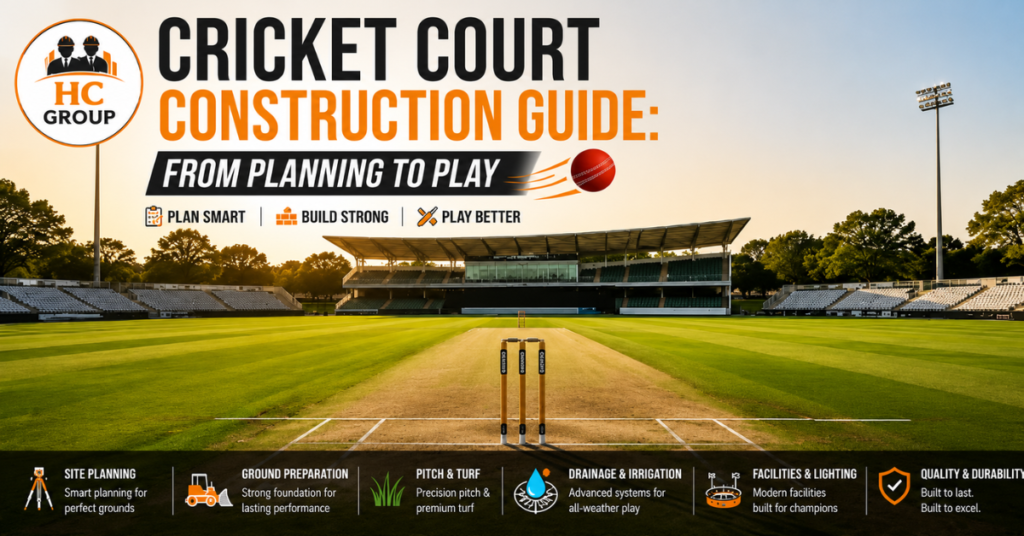
The growing popularity of cricket among schools, residential communities, sports academies, clubs, and commercial developments has significantly increased the demand for professional cricket court construction services. Developing a cricket facility involves much more than preparing a playing area, as it requires careful planning, engineering precision, advanced drainage solutions, and high-quality materials to deliver excellent playing conditions. Every aspect of the facility, from the pitch to the outfield and surrounding infrastructure, directly affects player safety, game performance, and maintenance requirements. A professionally designed cricket court provides consistent bounce, better water management, and long-term durability that minimizes repair expenses over time.
Modern sports facilities also integrate advanced irrigation systems, energy-efficient lighting, and sustainable landscaping solutions to improve usability and environmental performance. Whether the project involves a training academy, educational institution, private sports club, or professional venue, investing in quality construction ensures lasting value. Understanding the technical aspects of cricket court construction enables project owners to make informed decisions and avoid costly mistakes during development. This guide explores every important stage, from planning and design to maintenance and long-term performance.
Why Professional Cricket Court Construction Matters
Professional cricket court construction ensures that every technical element of the facility performs efficiently for years to come. Poorly planned facilities often suffer from uneven playing surfaces, drainage failures, excessive maintenance costs, and reduced player satisfaction. The quality of ground preparation, pitch engineering, and material selection directly influences gameplay and operational efficiency. Experienced professionals follow international standards to ensure proper dimensions, accurate grading, and long-lasting performance.
Improved Playing Performance
A professionally developed cricket court provides consistent ball movement, reliable pitch behavior, and improved outfield performance that enhances the overall playing experience.
Enhanced Safety Standards
Proper leveling and surface preparation reduce uneven areas and minimize the risk of injuries during training sessions and competitive matches.
Reduced Maintenance Costs
High-quality materials and engineering techniques reduce future repairs and improve the lifespan of the facility.
Long-Term Investment Value
A professionally built cricket facility increases property value while attracting tournaments, memberships, and community events.
Planning Your Cricket Court Project
Before beginning cricket court construction, careful planning is essential to ensure the facility meets operational requirements and future growth objectives.
- Define whether the project is intended for professional matches, training academies, schools, or community sports programs.
- Evaluate land size and future expansion possibilities.
- Select a location with easy accessibility and transportation links.
- Assess local weather patterns and rainfall conditions.
- Determine budgets for construction and maintenance.
- Review zoning regulations and approval requirements.
- Plan parking facilities and spectator access areas.
- Include supporting amenities such as seating, dressing rooms, and practice nets.
Proper planning during the early stages significantly improves project efficiency and reduces unexpected costs.
Understanding Cricket Court Dimensions and International Standards
A successful cricket facility begins with precise measurements and compliance with international standards. Proper dimensions directly influence player safety, game quality, and tournament eligibility. Although cricket facilities vary depending on project requirements, professional venues generally follow internationally accepted boundary recommendations and pitch dimensions. Adequate safety areas surrounding the playing surface are equally important for player movement and fielding activities. Ground orientation also plays a major role, with north-south alignment preferred to minimize direct sunlight interference during matches. Training facilities often include practice pitches and dedicated net areas to support skill development programs. Following these standards during cricket court construction ensures long-term functionality and professional-quality performance.
Site Preparation and Earthwork Requirements
The success of cricket court construction starts below the visible playing surface. Site preparation begins with detailed surveys, soil testing, and drainage assessments to determine the suitability of the land for sports development. Excavation removes unsuitable materials and creates the required formation levels for construction activities. Engineers then perform grading and compaction processes to establish a stable foundation capable of supporting turf systems and infrastructure. Laser-guided equipment is frequently used to achieve accurate slopes that facilitate effective water runoff without compromising gameplay quality.
Proper earthwork preparation significantly reduces the risk of settlement issues, water accumulation, and uneven surfaces in the future. Ignoring this stage often leads to expensive repairs and reduced facility performance. Investing in professional site preparation creates a strong foundation for long-term success.
Cricket Pitch Construction Process
The pitch remains the heart of any cricket facility, making its development one of the most critical stages of the project.
Natural Turf Pitch Preparation
Natural pitches require carefully selected clay soils that provide the ideal balance of bounce, hardness, and moisture retention.
Base Formation and Layering
Multiple engineered layers are installed to achieve structural stability and consistent playing characteristics.
Pitch Rolling and Compaction
Specialized rolling techniques create the firmness and surface consistency required for competitive cricket.
Moisture Management
Controlled irrigation systems help maintain pitch quality throughout the playing season.
Artificial Pitch Alternatives
Synthetic surfaces offer lower maintenance requirements and year-round usability for academies and training centers.
Choosing the Right Playing Surface
Selecting the correct surface is one of the most important decisions during cricket court construction because it directly impacts performance, maintenance costs, and durability. Natural grass remains the preferred option for professional venues due to its traditional playing characteristics and visual appeal. Hybrid turf technologies combine natural grass with synthetic reinforcement to improve wear resistance and recovery rates. Artificial turf systems have become increasingly popular for schools and training facilities because they offer lower maintenance requirements and all-weather usability. Surface selection should consider local climate conditions, expected usage levels, and long-term maintenance budgets. Consulting experienced professionals helps ensure the selected solution aligns with project goals and performance expectations.
Drainage and Irrigation Systems for Cricket Courts
Modern cricket court construction projects rely heavily on effective drainage and irrigation systems to maintain high-quality playing conditions.
- Prevent water accumulation after rainfall.
- Improve turf health and root development.
- Support consistent pitch moisture levels.
- Reduce erosion and surface deterioration.
- Improve year-round playability.
- Minimize long-term maintenance expenses.
A properly engineered drainage system significantly extends the lifespan of the facility while improving player experience and operational efficiency.
Essential Facilities for a Modern Cricket Court
Modern cricket facilities require much more than a playing surface to meet the expectations of players, coaches, and spectators. Practice nets and training areas support athlete development programs and improve skill-building opportunities. Floodlighting systems enable evening matches and increase facility utilization throughout the year. Comfortable seating arrangements improve spectator experiences while supporting tournaments and events. Dressing rooms, administrative spaces, and medical facilities improve operational efficiency and convenience for players and staff. Digital scoreboards and technology integrations further enhance the professional appearance and functionality of the venue. These additional facilities contribute significantly to the long-term value and usability of the project.
Understanding Cricket Court Construction Costs
The cost of cricket court construction depends on various factors, including project size, materials, site conditions, and supporting infrastructure requirements. Pitch type selection, lighting systems, drainage solutions, landscaping, and spectator facilities all contribute to overall budgets. Projects involving professional facilities and large seating areas generally require higher investments than community or training venues. Ground conditions can also influence expenses, particularly when additional excavation or soil stabilization measures are required. Property owners can benefit from using a Construction Cost Calculator to estimate project budgets and compare options more effectively. While initial costs may appear substantial, investing in quality workmanship significantly reduces future repair and maintenance expenses. A professionally built cricket facility often provides decades of reliable service and long-term value.
Common Cricket Court Construction Mistakes to Avoid
Several avoidable mistakes can negatively affect the success of cricket court construction projects. Poor drainage planning frequently causes waterlogging and surface deterioration. Inadequate soil preparation often leads to uneven playing conditions and settlement issues over time. Selecting unsuitable grass varieties can increase maintenance requirements and reduce surface quality during seasonal changes. Improper orientation may create visibility issues due to direct sunlight exposure during matches. Many projects also underestimate maintenance requirements, resulting in higher operational costs in the future. Avoiding these mistakes through proper planning and professional guidance significantly improves long-term performance and reliability.
Cricket Court Maintenance for Long-Term Performance
Maintaining a facility properly is essential after completing cricket court construction to protect the investment and preserve playing quality. Regular mowing, fertilization programs, and irrigation adjustments support healthy turf growth and improve appearance throughout the year. Pitch rolling schedules and moisture management practices maintain consistent playing conditions for training and competitive matches. Routine inspections help identify minor issues before they develop into costly repairs. Seasonal maintenance programs are particularly important for outdoor facilities exposed to changing weather conditions. A proactive maintenance strategy extends the lifespan of the facility while reducing long-term operational costs.
Key Maintenance Priorities
- Regular turf management and mowing schedules.
- Drainage inspections and cleaning.
- Pitch rolling and moisture control.
- Seasonal surface repairs and restoration work.
Read more: Why Investing in a Sports Complex Is a Smart Choice
Building a Cricket Court That Stands the Test of Time
Successful cricket court construction requires much more than preparing a playing surface. It involves strategic planning, engineering expertise, premium materials, efficient drainage systems, and ongoing maintenance practices to ensure outstanding performance for years to come. Every decision made during development directly impacts player safety, operational costs, and long-term durability. From pitch preparation and turf selection to lighting installations and supporting facilities, each component contributes to the success of the project.
Whether developing a private academy, educational institution, community sports complex, or professional venue, investing in quality construction provides significant long-term benefits. By working with experienced professionals and following international standards, property owners can create world-class facilities that deliver exceptional reliability, performance, and value. This commitment to excellence continues to make HC Group a trusted choice for modern sports infrastructure projects.
FAQ’s
How long does cricket court construction take?
Most projects require between 3 and 12 months depending on facility size, weather conditions, and site complexity.
What is the most important part of cricket court construction?
Proper site preparation, drainage systems, and pitch development are among the most critical factors.
What type of surface is best for cricket facilities?
The ideal surface depends on climate conditions, expected usage levels, and maintenance capabilities.
How much does cricket court construction cost?
Costs vary depending on ground size, facilities, drainage systems, lighting installations, and landscaping requirements.
How often should a cricket pitch be maintained?
Professional facilities typically perform maintenance activities daily or weekly based on usage intensity.
Can artificial turf be used for cricket courts?
Yes, artificial turf is widely used in schools, academies, and recreational facilities due to its low maintenance requirements and year-round usability.