The sports and recreation industry has experienced significant growth in recent years, creating new opportunities for investors, developers, educational institutions, and private organizations. As communities place greater emphasis on health, fitness, and organized sports activities, the demand for modern sports facilities continues to rise. This trend has transformed sports infrastructure into a valuable long-term investment capable of generating financial returns while supporting community development. A well-designed sports complex can accommodate multiple activities, attract diverse user groups, and create sustainable revenue streams throughout the year. Sports Complex Investment is no longer limited to large cities or professional sports organizations. Educational institutions, residential communities, corporate organizations, and private investors increasingly recognize the benefits of developing high-quality sports facilities. As the demand for sports infrastructure continues to grow, investing in a professionally planned sports complex becomes an increasingly strategic business decision.
Understanding Sports Complex Development
Before evaluating investment opportunities, it is important to understand what a sports complex includes and how modern facilities are designed to maximize usability and long-term value.
What Is a Sports Complex?
A sports complex is a dedicated facility that accommodates multiple sports and recreational activities within a single development. These facilities may include courts, grounds, tracks, spectator areas, administrative spaces, and supporting infrastructure designed to serve athletes, visitors, and community members.
Types of Sports Complex Facilities
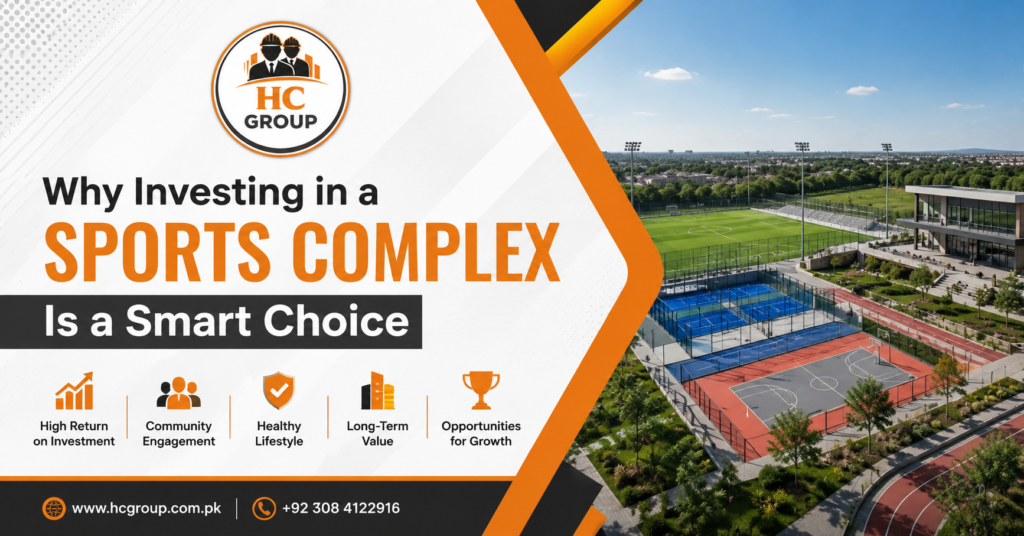
Modern sports complexes often incorporate a variety of facilities including padel courts, tennis courts, cricket grounds, futsal courts, squash courts, jogging tracks, and multi-purpose recreational spaces. The combination of facilities depends on project goals, available land, and target users.
Growing Demand for Modern Sports Infrastructure
The increasing popularity of organized sports, fitness programs, and recreational activities has created strong demand for professional sports infrastructure. Communities now require safe, durable, and accessible facilities capable of supporting year-round activities.
Role of Sports Facilities in Communities
Sports complexes play an important role in promoting physical activity, encouraging social interaction, and supporting local sports development. They provide spaces where individuals of all ages can participate in recreational and competitive activities while strengthening community engagement. Discover the expertise behind our high-quality sports infrastructure and construction solutions.
Key Benefits of Investing in a Sports Complex
Investing in sports infrastructure provides a wide range of advantages for investors, developers, and communities.
- Creates long-term revenue opportunities
- Increases land and property value
- Supports community development
- Promotes healthy lifestyles
- Attracts tournaments and sporting events
- Generates employment opportunities
- Encourages youth participation in sports
- Supports commercial partnerships and sponsorships
- Provides multi-purpose facility utilization
- Enhances local infrastructure development
These benefits demonstrate why Sports Complex Investment continues to attract attention from both public and private sector organizations. Unlike many traditional developments, sports facilities provide economic, social, and recreational value simultaneously. Their ability to serve multiple user groups while generating consistent activity throughout the year makes them a highly versatile investment option. When properly planned and managed, sports complexes can deliver sustainable benefits for decades.
Financial Advantages of Sports Complex Investment
One of the primary reasons investors consider sports infrastructure is its strong potential for long-term revenue generation. Sports complexes can create income through court rentals, membership programs, coaching academies, event hosting, sponsorship agreements, and commercial leasing opportunities. Facilities that offer multiple sports activities often experience higher utilization rates because they attract a wider range of users throughout different seasons and time periods. This diversification helps create stable revenue streams while reducing dependence on a single source of income.
In addition to direct earnings, Sports Complex Investment can significantly increase the value of surrounding real estate and commercial developments. Sports facilities often become key attractions within residential communities, educational institutions, and mixed-use developments. Their presence enhances property appeal while contributing to long-term area growth. Investors who incorporate professional planning, durable infrastructure, and future expansion capabilities into their projects are often better positioned to achieve stronger returns over time. As demand for quality recreational facilities continues to increase, sports complexes remain one of the most promising infrastructure investments available today. Professional sports complex solutions to see how expertly planned facilities can maximize performance, durability, and long-term investment value.
Revenue Streams in Modern Sports Complexes
A major advantage of Sports Complex Investment is the ability to generate income through multiple revenue channels. Unlike many single-purpose facilities, sports complexes can serve different user groups simultaneously, creating consistent activity and financial returns throughout the year. The availability of various sports facilities allows operators to diversify income sources while maximizing space utilization. This flexibility helps improve profitability and long-term sustainability.
Court and Facility Rentals
Sports courts and playing fields can be rented on an hourly, daily, or seasonal basis. Padel courts, tennis courts, futsal courts, squash courts, and cricket facilities often generate steady revenue through regular bookings.
Sports Academy Programs
Training academies provide opportunities for coaching programs, youth development initiatives, and specialized sports instruction. These programs create recurring revenue while supporting athlete development.
Tournament Hosting
Sports complexes can host local, regional, and national competitions that attract participants, spectators, sponsors, and vendors. Such events often generate additional income through registration fees and facility rentals.
Sponsorship Opportunities
Corporate sponsorships, advertising placements, and branding partnerships provide valuable income streams while enhancing the facility’s market presence.
Food and Retail Facilities
Cafeterias, sports shops, equipment stores, and refreshment areas create supplementary revenue while improving visitor convenience.
Community and Social Impact
Beyond financial benefits, sports complexes play a significant role in improving community well-being and social development. Modern sports facilities create environments where people can participate in physical activities, build social connections, and engage in healthy recreational programs. Access to quality sports infrastructure encourages active lifestyles and helps address growing concerns related to physical inactivity and health issues.
Sports complexes also contribute to youth development by providing safe spaces for training, competition, and skill-building activities. Young athletes benefit from professional facilities that support learning, discipline, teamwork, and personal growth. Community sports programs often strengthen social relationships while promoting inclusivity among people from different backgrounds. In many regions, sports facilities become central gathering places that foster a sense of community and belonging.
Essential Features of a Successful Sports Complex
The long-term success of any sports facility depends on proper planning, quality infrastructure, and efficient operational design. Several key components contribute to the functionality, safety, and overall performance of a modern sports complex.
1. Professional Sports Courts
Properly designed courts provide athletes with safe and consistent playing conditions while supporting various levels of competition.
2. Spectator Seating Areas
Comfortable seating arrangements improve visitor experiences and accommodate larger audiences during tournaments and events.
3. Lighting Systems
Advanced lighting solutions ensure visibility, safety, and extended facility usage during evening hours.
4. Drainage Infrastructure
Efficient drainage systems prevent water accumulation and help maintain uninterrupted sports activities during varying weather conditions.
5. Synthetic Turf and Flooring
Durable sports surfaces improve safety, reduce maintenance requirements, and enhance athletic performance.
6. Parking and Accessibility
Adequate parking areas and accessible pathways improve convenience for athletes, visitors, and event attendees.
A successful sports complex integrates these features into a cohesive development strategy that supports both operational efficiency and user satisfaction. Careful attention to infrastructure quality ensures long-term durability while minimizing maintenance challenges.
Popular Facilities Included in Modern Sports Complexes
Modern sports complexes are designed to accommodate a wide range of recreational and competitive activities. Multi-sport developments attract larger user bases and maximize facility utilization throughout the year.
Padel Courts
Padel is one of the fastest-growing sports globally. Professional padel courts attract recreational players, sports clubs, and competitive tournaments.
Tennis Courts
Tennis remains one of the most popular sports worldwide. Quality court construction supports training programs, competitions, and community participation.
Cricket Grounds
Cricket facilities require specialized pitch preparation, drainage systems, and ground development to support professional and recreational gameplay.
Futsal Courts
Futsal continues to gain popularity due to its fast-paced nature and space-efficient requirements. Dedicated courts support leagues, academies, and community events.
Squash Courts
Professional squash courts provide opportunities for indoor sports participation while supporting competitive and recreational play.
Jogging Tracks
Jogging tracks promote fitness and wellness while providing accessible recreational options for users of all ages.
Multi-Purpose Sports Areas
Flexible sports zones accommodate various activities and maximize space utilization within the complex.
The inclusion of multiple facilities increases operational flexibility and attracts a broader audience. Developers often combine these amenities to create comprehensive sports destinations capable of serving diverse community needs.
Factors to Consider Before Investing
Every successful sports facility begins with thorough planning and strategic decision-making.
✔ Location and accessibility
✔ Market demand assessment
✔ Land availability
✔ Construction budget planning
✔ Facility management strategy
✔ Regulatory approvals
✔ Maintenance requirements
✔ Future expansion opportunities
Investors should carefully evaluate these factors before initiating development. A detailed feasibility study helps identify potential opportunities and challenges while ensuring resources are allocated efficiently. Understanding user demand, operational costs, and long-term growth potential significantly improves the likelihood of project success. Proper planning reduces risks while maximizing the benefits of Sports Complex Investment.
Importance of Professional Sports Facility Planning
Proper planning is one of the most critical factors in the success of any sports infrastructure project. A well-planned facility not only improves operational efficiency but also enhances user experience, safety, and long-term sustainability. Professional planning ensures that every component of the sports complex is strategically positioned to maximize functionality while supporting future growth. From site selection and circulation management to facility zoning and infrastructure integration, every detail contributes to overall project performance.
Modern sports developments require careful coordination between architects, engineers, contractors, and facility operators. Efficient space utilization helps accommodate multiple sports activities without creating operational conflicts. Proper planning also addresses safety regulations, accessibility requirements, drainage systems, lighting infrastructure, and maintenance considerations. By investing in professional sports facility planning, developers can reduce construction risks, improve cost efficiency, and create facilities capable of serving communities for many years. Using a Construction Cost Calculator can also help estimate project costs more accurately during the planning stage, allowing for better budgeting and investment decisions.
Emerging Trends in Sports Complex Development
The sports infrastructure sector continues to evolve as technology, sustainability, and user expectations shape modern facility design. Investors increasingly seek innovative solutions that improve performance, operational efficiency, and visitor experiences.
Smart Sports Facilities
Modern sports complexes incorporate digital technologies that support facility management, access control, booking systems, and performance monitoring. Smart solutions improve operational efficiency while enhancing convenience for users.
Sustainable Infrastructure
Sustainability has become a major priority in sports facility construction. Energy-efficient lighting, water conservation systems, environmentally friendly materials, and sustainable landscaping help reduce operational costs and environmental impact.
Advanced Lighting Systems
Modern LED lighting systems provide superior visibility, lower energy consumption, and improved durability compared to traditional lighting solutions.
Synthetic Turf Solutions
High-quality synthetic turf continues to gain popularity because it offers durability, reduced maintenance requirements, and consistent playing conditions throughout the year.
Why Choose Professional Sports Complex Developers
The success of a sports infrastructure project depends heavily on the expertise and experience of the development team. Professional sports complex developers understand the technical requirements associated with planning, design, engineering, construction, and long-term facility performance. Their knowledge helps ensure that projects meet industry standards while supporting operational efficiency and user safety.
Experienced developers also provide valuable guidance throughout every project phase, from feasibility analysis and design development to construction execution and final delivery. Their ability to coordinate multiple disciplines helps reduce project risks while maintaining quality standards. Companies such as HC Group offer integrated sports infrastructure solutions that combine professional planning, quality construction, and modern facility development practices. Working with experienced professionals ensures that Sports Complex Investment projects achieve their intended objectives while delivering long-term value for investors and communities.
Long-Term Value of Sports Infrastructure Development
Sports infrastructure continues to play an increasingly important role in modern urban development. As demand for recreational facilities, fitness programs, and organized sports activities grows, high-quality sports complexes become valuable community assets that support both social and economic development. These facilities provide opportunities for participation, competition, education, and community engagement while creating sustainable business opportunities for investors.
A strategically developed sports complex can serve generations of users while adapting to changing market needs and emerging sports trends. By focusing on quality construction, durable infrastructure, and effective management strategies, investors can create facilities that remain relevant and profitable over the long term. This combination of financial performance and social impact makes Sports Complex Investment one of the most attractive opportunities within modern infrastructure development.
Conclusion
Investing in sports infrastructure offers far more than financial returns. A professionally developed sports complex creates opportunities for community engagement, youth development, healthy lifestyles, and economic growth while generating sustainable revenue streams. The increasing demand for modern recreational facilities has positioned Sports Complex Investment as a valuable long-term strategy for developers, educational institutions, organizations, and private investors. Successful projects require careful planning, quality construction, and a thorough understanding of operational requirements. Facilities that incorporate modern infrastructure, multiple sports amenities, efficient management systems, and future expansion capabilities are better positioned for long-term success. As communities continue to prioritize health, fitness, and recreational development, sports complexes will remain essential assets that deliver lasting value for both investors and society. Through professional planning and execution, organizations like HC Group help transform sports infrastructure concepts into successful and sustainable developments.
FAQ’s
What is Sports Complex Investment?
Sports Complex Investment refers to the development, construction, or acquisition of sports facilities designed to generate financial returns while supporting recreational and community activities.
Why is investing in a sports complex considered a smart choice?
Sports complexes offer multiple revenue streams, increase property value, support community development, and provide long-term growth opportunities.
What facilities are commonly included in a sports complex?
Modern sports complexes may include padel courts, tennis courts, cricket grounds, futsal courts, squash courts, jogging tracks, spectator seating, lighting systems, and support facilities.
How do sports complexes generate revenue?
Revenue is generated through facility rentals, memberships, training academies, tournaments, sponsorships, retail outlets, and corporate events.
What factors should be considered before investing in a sports complex?
Important considerations include location, market demand, land availability, construction costs, operational planning, maintenance requirements, and future expansion opportunities.