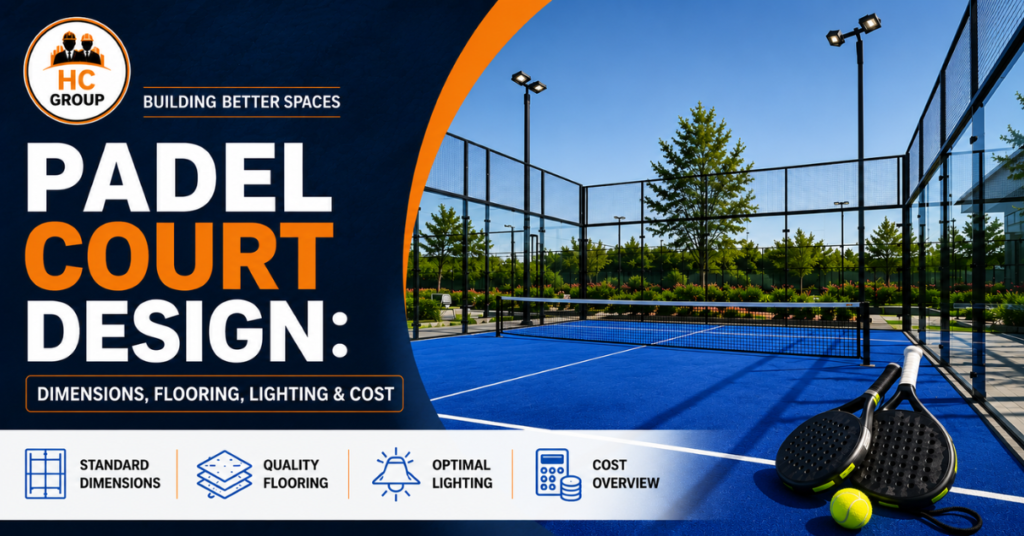
The growing popularity of padel has created increasing demand for professionally designed sports facilities in residential communities, clubs, academies, hotels, and commercial developments. A successful padel court requires much more than an enclosed playing area, as every element from dimensions and flooring to glass panels, lighting, drainage, and structural support influences the player experience. Proper design helps create consistent ball behavior, safe player movement, effective visibility, and long-term durability under frequent use. It also allows property owners to plan the available space efficiently while considering access, spectator areas, maintenance requirements, and future expansion.
Choosing appropriate materials is equally important because outdoor facilities must withstand weather exposure, while indoor installations have different structural and ventilation considerations. A professionally planned facility can also provide a more attractive environment for tournaments, training programs, memberships, and recreational activities. Before starting installation, it is therefore important to understand the technical requirements and cost factors involved. This guide explores the essential aspects of designing a durable, safe, and visually appealing padel facility from dimensions and flooring to lighting, materials, installation, and maintenance.
Why Professional Padel Court Design Matters
Professional design provides the foundation for a facility that performs consistently throughout its service life. A properly planned padel court considers playing dimensions, structural stability, surface performance, drainage, lighting, safety, and accessibility before construction begins. Accurate planning helps prevent expensive modifications caused by inadequate space, poor orientation, unsuitable foundations, or incorrectly positioned equipment. Design professionals can also evaluate the site’s soil conditions, climate, accessibility, and drainage requirements to determine the most appropriate construction approach.
The playing surface must provide suitable traction while allowing predictable ball movement and comfortable player movement during fast rallies. Glass walls and steel structures require careful engineering because they must remain stable while withstanding regular impact and environmental exposure. Lighting design is another important consideration because poor positioning can create glare, shadows, or inconsistent visibility during evening matches. Investing in professional planning ultimately improves performance, reduces maintenance problems, and increases the long-term value of the sports facility.
Understanding Standard Padel Court Dimensions
Accurate dimensions are essential for creating a playing environment that supports consistent gameplay and professional standards. The standard layout provides a defined playing area enclosed by walls and fencing, with carefully positioned entrances and adequate surrounding space for safe movement.
Standard Court Size
A regulation padel court generally measures 10 meters wide by 20 meters long, creating a rectangular playing area suitable for doubles play. Maintaining these dimensions is important because even relatively small variations can affect player positioning and gameplay.
Court Height
The enclosed structure requires sufficient vertical clearance so that players can safely execute overhead shots without unnecessary restrictions. Indoor facilities should also consider the height of the building structure, lighting equipment, ventilation, and other overhead services.
Surrounding Clearance
Although the playing area has defined dimensions, designers should also consider the space around the court for access, maintenance, player circulation, and safety. Facilities that may host competitive play should evaluate whether additional external clearance is appropriate for their intended use.
Court Orientation
Orientation can influence sunlight, wind exposure, visibility, and player comfort, particularly for outdoor installations. Careful positioning can help minimize glare and improve overall usability throughout different times of the day.
Key Design Elements of a Modern Padel Court
A high-quality facility combines several components that work together to provide safe and consistent playing conditions. Each element should be selected according to the intended usage, climate, budget, and expected maintenance requirements.
- Structural Framework: Provides stability and supports the glass and fencing systems.
- Tempered Glass: Creates visibility while forming strong perimeter walls around the playing area.
- Steel Mesh: Helps contain the ball and provides additional structural enclosure.
- Artificial Turf: Provides traction, comfort, and predictable ball response.
- Court Markings: Clearly define the playing boundaries and service areas.
- Access Doors: Provide safe and convenient entry and exit points.
- Drainage System: Helps remove rainwater and protect outdoor playing surfaces.
- Sports Lighting: Provides consistent visibility for evening matches and training.
- Foundation System: Creates a stable base that helps prevent settlement and movement.
- Safety Features: Reduce risks associated with impact, movement, and facility access.
Choosing the Right Padel Court Flooring
Flooring is one of the most important design decisions because it directly affects player comfort, traction, ball bounce, and maintenance requirements. Artificial turf is commonly used because it provides a suitable playing surface while supporting consistent movement and ball response. However, not all synthetic turf products provide the same performance, so factors such as pile height, fiber quality, density, shock absorption, drainage, UV resistance, and wear characteristics should be evaluated. The surface should provide enough grip for quick changes in direction without creating excessive resistance that could affect player movement.
Outdoor facilities also require flooring systems that can handle moisture, sunlight, and temperature changes without rapid deterioration. Proper sub-base preparation is equally important because even high-quality turf can perform poorly when installed over an unstable or uneven foundation. Drainage beneath and around the surface should prevent standing water that could damage the turf or make the facility unusable after rainfall. Selecting the right flooring system and installing it professionally can significantly improve playing quality and extend the service life of the facility.
What to Look for in Padel Flooring
- Consistent ball bounce
- Suitable player traction
- Shock absorption
- UV resistance
- Weather durability
- Effective drainage
- Strong fiber construction
- Low maintenance requirements
- Proper seam installation
- Long-term wear resistance
Glass Walls, Fencing & Structural Requirements
The enclosure is a defining feature of modern padel facilities and requires careful selection of materials and engineering methods during padel court construction. Tempered safety glass provides excellent visibility for players and spectators while allowing the ball to rebound consistently from the surrounding walls. The thickness and specification of the glass should be selected according to appropriate safety and structural requirements rather than appearance alone. Steel mesh fencing complements the glass enclosure by containing the playing area while contributing to the overall strength and stability of the structure.
For outdoor padel court construction, galvanized or appropriately protected steel can provide better resistance against corrosion caused by humidity, rain, and changing weather conditions. Strong anchoring systems and properly engineered foundation connections are also essential for keeping the enclosure stable during regular gameplay and environmental exposure. Entry doors should be positioned conveniently without interfering with player movement or creating unnecessary safety hazards. A professionally engineered enclosure improves the appearance of the facility while providing the strength, safety, durability, and long-term performance required for a high-quality padel facility.
Padel Court Lighting for Day and Night Play
A well-designed lighting system allows facilities to extend operating hours while maintaining suitable visibility during evening matches and training sessions. LED sports lighting is generally preferred because it offers efficient operation, long service life, and consistent illumination when properly specified. Light positioning should be carefully planned to reduce glare and minimize shadows across the playing surface. Uneven lighting can make it difficult for players to track fast-moving balls, particularly during overhead shots and quick rallies. The height, angle, spacing, and output of fixtures should therefore be considered as part of the overall court design rather than added after construction. Outdoor installations should also use appropriately protected equipment capable of handling environmental exposure. Automated controls, timers, and energy-efficient systems can further improve operational convenience and reduce unnecessary electricity consumption.
Important Lighting Considerations
- Use appropriate sports lighting designed for court-based activities.
- Position fixtures strategically to create uniform illumination.
- Minimize glare to improve player comfort and visibility.
- Reduce shadows across the playing surface.
- Choose weather-resistant equipment for outdoor facilities.
- Consider energy-efficient LED systems for long-term operating savings.
Indoor vs Outdoor Padel Court Design
Choosing between indoor and outdoor installation depends on the climate, available property, budget, expected usage, and operational goals. Indoor facilities provide greater protection from rain, extreme temperatures, and direct sunlight, allowing more consistent year-round operation. However, they require suitable building height, ventilation, structural support, artificial lighting, and adequate internal circulation. Outdoor facilities generally provide greater flexibility in location and can be more economical when suitable land is already available. They do, however, require stronger consideration of drainage, weather resistance, UV exposure, wind, and surface maintenance.
| Feature | Indoor Facility | Outdoor Facility |
| Weather exposure | Minimal | High |
| Drainage requirements | Lower | Essential |
| Natural lighting | Limited/controlled | Available |
| Artificial lighting | Essential | Important for evening play |
| UV exposure | Lower | Higher |
| Weather protection | Excellent | Limited |
| Maintenance factors | Building-related | Weather-related |
| Design flexibility | Depends on building | Greater site flexibility |
The right option ultimately depends on the facility’s business model and location. A commercial sports club may benefit from indoor courts where year-round scheduling is important, while an outdoor facility may be attractive for residential communities, schools, academies, and recreational developments.
Padel Court Design & Installation Process
Professional installation should follow a structured process to ensure the final facility meets design, safety, and performance requirements.
Step 1: Site Assessment
The project begins with an assessment of land availability, soil conditions, access, drainage, utilities, and environmental factors.
Step 2: Design & Layout
Designers finalize dimensions, orientation, access points, surrounding circulation, lighting positions, and supporting infrastructure.
Step 3: Foundation Preparation
The site is excavated, graded, compacted, and prepared to create a stable foundation for the structural system.
Step 4: Structural Installation
The steel framework, glass panels, fencing, doors, and associated components are installed according to the approved design.
Step 5: Flooring Installation
The selected artificial turf system is installed over the prepared base with appropriate attention to seams, alignment, drainage, and surface quality.
Step 6: Lighting Installation
Lighting fixtures are positioned and tested to provide consistent illumination while minimizing glare and shadows.
Step 7: Final Inspection
The completed facility is inspected for structural stability, surface quality, drainage, lighting, safety, access, and overall playing conditions.
Read more: Padel Court Construction: Complete Planning Guide
Factors Affecting Padel Court Cost
The total cost of a padel court varies considerably depending on site conditions, materials, design specifications, and supporting infrastructure. A simple outdoor installation on a prepared site may require a different investment from a premium indoor facility with extensive structural work and spectator amenities. Foundation requirements can significantly influence the budget when soil stabilization, excavation, leveling, or additional drainage work is required. The choice of glass, steel framework, artificial turf, lighting, and accessories also affects the final price. Transportation and installation costs may increase when the project site has difficult access or requires specialized equipment. Indoor projects may involve additional expenses for building modifications, roofing, ventilation, electrical systems, and internal finishing. Property owners should therefore evaluate the complete project cost rather than comparing individual material prices. A detailed estimate prepared after site assessment provides a more realistic understanding of the investment required.
Major Cost Factors
- Site preparation and excavation
- Foundation requirements
- Structural steel
- Tempered glass
- Artificial turf
- Lighting system
- Drainage
- Access doors
- Electrical work
- Transportation
- Installation labor
- Landscaping
- Seating and spectator facilities
- Future maintenance
How to Choose the Right Materials
Material selection should be based on performance, climate, usage intensity, maintenance requirements, and expected lifespan rather than appearance alone. The structural framework should have suitable corrosion protection, particularly for outdoor projects exposed to rain and humidity. Glass should meet appropriate safety and strength requirements, while fencing should provide reliable containment and structural stability. Artificial turf needs to be selected according to player traction, ball response, drainage, UV exposure, and expected usage levels. Lighting equipment should provide consistent illumination while remaining efficient and durable under the facility’s operating conditions. Drainage materials and foundation systems also deserve careful consideration because problems beneath the playing surface can be expensive to correct later. Although premium materials may require a higher initial investment, they can reduce replacement and maintenance costs over the facility’s lifespan. Professional selection ensures that every component works together as part of a complete and reliable sports infrastructure system.
Padel Court Maintenance for Long-Term Performance
Regular maintenance is essential for preserving the playing quality, safety, and appearance of a padel court. Artificial turf should be brushed and cleaned regularly to remove debris, redistribute fibers, and maintain consistent surface characteristics. Glass panels need routine cleaning so visibility remains clear for players and spectators. Structural connections, fencing, doors, and protective components should be inspected periodically for loose fittings, corrosion, or signs of wear. Outdoor facilities should receive particular attention after heavy rainfall or severe weather to identify drainage problems and surface damage. Lighting fixtures should also be tested regularly to identify failed lamps, electrical problems, or uneven illumination. Promptly addressing minor defects can prevent more expensive repairs and reduce unexpected downtime. A preventive maintenance schedule helps preserve the facility’s appearance, extend material life, and provide a consistently enjoyable playing experience.
Maintenance Checklist
- Clean the artificial turf regularly.
- Brush turf fibers according to manufacturer recommendations.
- Remove leaves, dirt, and debris.
- Inspect glass panels for damage.
- Check steel connections and fencing.
- Inspect drainage after heavy rainfall.
- Test sports lighting regularly.
- Check doors and access hardware.
- Monitor surface wear.
- Schedule periodic professional inspections.
Final Thoughts
Designing a successful facility requires careful coordination between dimensions, flooring, structural materials, lighting, drainage, safety, and long-term maintenance. A padel court should be planned around the needs of its users while also considering the property’s climate, available space, budget, and expected level of activity. High-quality artificial turf can improve playing comfort, while durable glass and steel structures provide safety and visual appeal. Proper lighting extends operating hours and creates better conditions for evening matches, while effective drainage protects outdoor surfaces from water-related damage.
Professional site preparation and installation are equally important because even premium materials can underperform when installed over an unsuitable foundation. Property owners should therefore focus on total lifecycle value rather than choosing products based only on their initial price. With proper planning, quality materials, and skilled workmanship, a padel facility can provide reliable performance and attractive returns for years. For sports infrastructure projects requiring professional planning and construction expertise, HC Group can help develop solutions tailored to the project’s functional and design requirements.
FAQ’s
What are the standard dimensions of a padel court?
A standard doubles padel court is generally 10 meters wide and 20 meters long. Additional surrounding space may be required for access, maintenance, and safety depending on the facility design.
What is the best flooring for a padel court?
Artificial turf specifically designed for padel is a popular option because it can provide suitable traction, consistent ball response, shock absorption, and durability when correctly installed and maintained.
How much does a padel court cost?
The cost varies according to foundation work, structural steel, glass, flooring, lighting, drainage, transportation, installation, and site conditions. A professional site assessment is recommended for an accurate project estimate.
What type of lighting is suitable for padel?
LED sports lighting is commonly used because it can provide efficient, long-lasting, and consistent illumination. Proper fixture positioning is essential to minimize glare and shadows.
Is an indoor or outdoor padel court better?
Both options have advantages. Indoor facilities offer greater weather protection and year-round consistency, while outdoor facilities provide greater site flexibility but require stronger consideration of drainage, UV exposure, and weather resistance.
How can a padel court be maintained?
Regular turf cleaning and brushing, glass cleaning, structural inspections, drainage checks, lighting tests, and prompt repairs can help maintain playing quality and extend the facility’s service life.