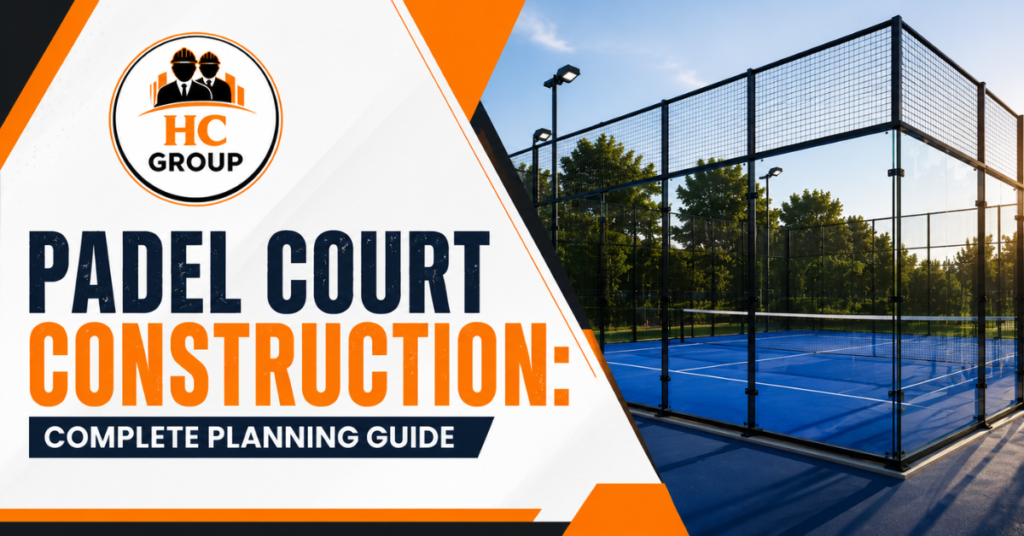
Padel has rapidly become one of the fastest-growing racket sports worldwide, attracting players of all ages because of its exciting gameplay, social appeal, and accessibility. As demand continues to increase, developers, sports clubs, educational institutions, residential communities, and commercial investors are actively investing in modern padel facilities. This growing popularity has made Padel Court Construction an important area of sports infrastructure development, requiring careful planning and professional execution. Building a high-quality court involves much more than installing artificial turf and glass walls; it requires proper engineering, site preparation, drainage, lighting, and adherence to international standards. Every stage of development directly influences player safety, court performance, maintenance requirements, and long-term durability. Whether the project involves a single recreational court or a multi-court sports complex, professional planning helps maximize both functionality and return on investment. Well-designed courts also enhance property value while attracting tournaments, coaching academies, memberships, and recreational users. Understanding the complete construction process enables investors to make informed decisions and achieve successful long-term results.
Understanding Padel Court Construction
Before starting any project, it is important to understand what professional court development involves and why every construction phase contributes to long-term performance.
What Is a Padel Court?
A padel court is an enclosed playing area specifically designed for the sport of padel. Unlike traditional tennis courts, it features tempered glass walls, steel mesh fencing, artificial turf, and standardized dimensions that allow the walls to become part of the game. Professional Padel Court Construction ensures these elements work together to provide consistent gameplay and player safety.
Difference Between Padel and Tennis Courts
Although both sports use rackets and nets, padel courts are smaller and enclosed with glass and mesh structures. The playing style is faster, more strategic, and relies heavily on wall rebounds, making accurate construction essential for an enjoyable playing experience.
Why Padel Is Growing Worldwide
The sport requires less space than tennis, is easy for beginners to learn, and encourages social interaction through doubles matches. These advantages have significantly increased demand for new courts across residential communities, sports clubs, hotels, schools, and commercial developments.
Who Should Build a Padel Court?
Padel courts are suitable for sports clubs, educational institutions, housing societies, resorts, fitness centers, recreational parks, and private investors looking to expand sports facilities while generating long-term business opportunities.
Standard Padel Court Dimensions
Professional Padel Court Construction follows internationally recognized dimensions to ensure fair play, safety, and tournament compatibility. Building according to official specifications also simplifies future maintenance and increases the facility’s commercial value.
| Feature | Standard Measurement |
| Court Length | 20 meters |
| Court Width | 10 meters |
| Net Height (Center) | 0.88 meters |
| Net Height (Posts) | 0.92 meters |
| Glass Wall Height | 3–4 meters |
| Recommended Ceiling Height (Indoor) | 7–8 meters |
Maintaining these dimensions is critical because even minor deviations can affect gameplay, ball bounce, and player movement. Professional builders also consider surrounding clearance, spectator access, drainage, lighting placement, and maintenance access during the planning stage. Proper measurements ensure the court complies with international standards while delivering an excellent playing experience.
Key Stages of Padel Court Construction
Every successful project follows a structured construction process to achieve durability, safety, and high performance.
1. Site Selection
Choose a location with sufficient space, accessibility, and proper environmental conditions for long-term operation.
2. Ground Preparation
The site is excavated, leveled, and compacted to create a stable base capable of supporting the entire court structure.
3. Drainage Installation
Efficient drainage systems prevent water accumulation, protecting the foundation and artificial turf from long-term damage.
4. Concrete Foundation
A reinforced concrete slab provides structural stability and supports steel framing, glass panels, and sports flooring.
5. Steel Structure Installation
Galvanized steel frames are installed to support fencing, lighting systems, and tempered glass walls while resisting corrosion.
6. Glass Wall Installation
High-strength tempered glass panels are precisely installed to maintain player safety and consistent ball rebound.
7. Artificial Turf Installation
Premium synthetic turf provides reliable ball bounce, excellent traction, durability, and low maintenance.
8. Lighting Installation
Professional LED sports lighting ensures consistent visibility for evening matches while minimizing energy consumption.
9. Final Inspection and Testing
Every construction component is carefully inspected to ensure compliance with design specifications, safety standards, and overall quality before the facility becomes operational.
Following this systematic process allows Padel Court Construction projects to achieve long-term durability while minimizing future maintenance requirements. Careful attention during every stage significantly improves court performance and user satisfaction.
Choosing the Right Padel Court Surface
Selecting the appropriate playing surface has a major influence on player comfort, maintenance requirements, and overall court performance. Different surface materials offer varying levels of durability, ball response, and maintenance demands.
Artificial Turf
Artificial turf is the most widely used option because it provides excellent grip, consistent ball bounce, weather resistance, and a professional playing experience. It also requires relatively low maintenance compared to natural grass.
Textured Concrete
Concrete surfaces are highly durable and cost-effective but generally provide a harder playing experience. They are often selected for recreational facilities with limited maintenance budgets.
Synthetic Sports Flooring
Modern synthetic flooring systems combine comfort, durability, and shock absorption, making them suitable for indoor sports environments and multi-purpose recreational facilities.
The final choice depends on project objectives, player expectations, environmental conditions, and long-term maintenance planning. Investing in premium surface materials improves safety, enhances gameplay, and increases the lifespan of the facility. Proper surface selection is therefore one of the most important decisions during Padel Court Construction. To better understand our experience in delivering quality sports infrastructure projects, learn more about expertise.
Importance of Drainage and Foundation
The foundation is one of the most important structural components of any sports facility. Even the highest-quality glass panels, steel structures, and artificial turf cannot perform effectively if the base beneath them is unstable. Professional Padel Court Construction begins with detailed site analysis to determine soil conditions, ground stability, and load-bearing capacity before excavation starts. Proper foundation preparation minimizes settlement, prevents structural movement, and supports consistent playing conditions throughout the court’s lifespan. Reinforced concrete foundations are commonly used because they provide excellent strength and durability while accommodating the weight of steel frameworks and glass enclosures. Poor foundation work often leads to uneven surfaces, drainage issues, and costly repairs that can significantly reduce the court’s lifespan. Investing in quality foundation engineering from the beginning helps avoid these problems while improving overall project performance.
Padel Court Lighting Requirements
Professional lighting extends court usability beyond daylight hours while improving player safety and visibility. Modern lighting systems are designed to deliver uniform illumination without creating glare or shadows.
LED Sports Lighting
LED fixtures provide bright, consistent illumination while consuming significantly less electricity than traditional lighting systems. They also require minimal maintenance and have a longer operational lifespan.
Recommended Lighting Levels
Professional courts require carefully calculated illumination levels that ensure clear visibility for players, officials, and spectators during both recreational and competitive matches.
Energy Efficiency
Modern LED technology reduces operating costs while maintaining high lighting performance, making it a practical long-term investment.
Night-Time Play
Proper lighting allows sports clubs and commercial facilities to maximize court bookings by extending playing hours into the evening.
Lighting design should always be integrated during the planning stage rather than treated as an afterthought. Pole positioning, beam angles, fixture selection, and electrical infrastructure all influence lighting performance. Professionally designed systems improve the overall playing experience while supporting efficient facility operations. These considerations make lighting an essential element of Padel Court Construction projects.
Indoor vs Outdoor Padel Courts
Choosing between indoor and outdoor courts depends on available space, climate conditions, investment goals, and intended usage.
| Feature | Indoor Court | Outdoor Court |
| Weather Protection | Excellent | Limited |
| Initial Investment | Higher | Lower |
| Operating Costs | Moderate | Lower |
| Maintenance | Lower | Moderate |
| Playing Availability | Year-round | Weather dependent |
| Commercial Potential | High | High |
Indoor facilities provide uninterrupted operation regardless of weather conditions, making them suitable for commercial clubs and training academies. Controlled environments also improve player comfort while protecting court surfaces from environmental wear. Outdoor courts, however, require lower construction costs and are often selected for residential communities, schools, hotels, and recreational developments. Although weather exposure increases maintenance requirements, outdoor facilities remain an excellent investment where climate conditions are favorable. Both options offer unique advantages, and selecting the right type depends on project objectives, available land, budget, and expected user demand.
Padel Court Construction Cost Factors
Several variables influence the overall project budget. Understanding these factors helps investors make informed financial decisions while planning realistic construction timelines.
- Site preparation and excavation
- Ground leveling and soil stabilization
- Reinforced concrete foundation
- Drainage system installation
- Steel structure fabrication
- Tempered glass installation
- Artificial turf selection
- LED sports lighting
- Perimeter fencing
- Seating and spectator areas
- Electrical infrastructure
- Project location and accessibility
- Indoor or outdoor court configuration
Every project has unique cost considerations depending on design specifications and site conditions. Premium materials generally require higher initial investment but often reduce maintenance costs and improve long-term durability. Careful budgeting during the planning stage minimizes unexpected expenses while ensuring construction quality remains uncompromised. A detailed cost assessment is therefore an important component of every Padel Court Construction project.
Maintenance Requirements for Long-Term Performance
Regular maintenance preserves both court appearance and playing quality while protecting the investment for many years.
Essential Maintenance Checklist
- Brush artificial turf regularly.
- Remove dust, leaves, and debris from the playing surface.
- Inspect glass panels for cracks or loose fittings.
- Tighten steel framework connections when necessary.
- Check drainage channels after heavy rainfall.
- Maintain proper sand distribution within artificial turf.
- Inspect lighting fixtures and electrical systems.
- Replace damaged nets and accessories promptly.
- Schedule periodic professional inspections.
Consistent maintenance reduces repair costs while extending the lifespan of the facility. Small issues identified early are easier and less expensive to resolve than major structural problems. A proactive maintenance program also ensures players enjoy safe, high-quality playing conditions throughout the year. For commercial sports facilities, regular maintenance supports customer satisfaction and protects long-term revenue generated through Padel Court Construction investments.
Read more: Why Investing in a Sports Complex Is a Smart Choice
Common Mistakes to Avoid
Many construction issues can be prevented through careful planning and professional project management.
- Choosing poor-quality construction materials.
- Ignoring proper drainage design.
- Using incorrect court dimensions.
- Selecting unsuitable artificial turf.
- Installing inadequate lighting systems.
- Neglecting foundation engineering.
- Overlooking future maintenance requirements.
- Hiring inexperienced contractors.
- Ignoring international construction standards.
- Underestimating project budgeting.
Avoiding these mistakes improves construction quality while reducing long-term operational risks. Professional planning ensures every stage of development follows recognized engineering practices and quality standards. This attention to detail ultimately enhances the performance, safety, and durability of Padel Court Construction projects.
Choosing the Right Padel Court Construction Company
Selecting the right contractor is one of the most important decisions in any sports infrastructure project. A reputable construction company brings together technical expertise, quality materials, engineering knowledge, and project management skills to deliver durable and high-performing courts. Experienced professionals understand international construction standards, ensuring every component—from the foundation to the lighting system—is installed with precision. Reviewing previous projects, client testimonials, and completed portfolios can help assess the company’s capabilities before making a decision. Transparent pricing, clear project timelines, and effective communication are also indicators of a reliable construction partner. Companies that provide end-to-end solutions, including design, construction, and post-installation support, often deliver better long-term value. Choosing an experienced contractor minimizes construction risks while ensuring the finished court meets both recreational and competitive standards. With professional expertise, Padel Court Construction becomes a long-term investment that delivers quality, durability, and exceptional playing experiences.
Future Trends in Padel Court Development
The rapid growth of padel has encouraged continuous innovation in sports facility design and construction. Modern developments increasingly focus on sustainability, smart technology, and enhanced player experiences.
Smart Court Technology
Digital booking systems, automated lighting controls, performance tracking, and online facility management are becoming standard features in modern padel facilities.
Sustainable Construction
Eco-friendly materials, recycled steel, energy-efficient lighting, and water-saving drainage systems are helping reduce environmental impact while lowering operating costs.
Premium Artificial Turf
Advanced synthetic turf technologies provide improved durability, consistent ball bounce, and enhanced player comfort while reducing maintenance requirements.
Modular Court Systems
Prefabricated structural components allow faster installation while maintaining high construction quality and reducing project timelines.
Conclusion
The growing popularity of padel has created exciting opportunities for sports clubs, developers, educational institutions, and private investors seeking long-term infrastructure investments. Professional Padel Court Construction requires far more than assembling structural components—it demands careful planning, quality engineering, proper drainage, premium materials, and adherence to international standards. Every phase of development contributes to player safety, court performance, operational efficiency, and long-term durability. Investing in experienced professionals ensures the finished facility meets both recreational and competitive expectations while minimizing future maintenance costs.
A well-designed padel court also creates lasting value by attracting memberships, tournaments, coaching programs, and community participation. Whether the objective is to develop a standalone court or integrate multiple sports facilities within a larger complex, strategic planning remains the key to long-term success. With its expertise in sports infrastructure development, HC Group delivers professional solutions that combine quality construction, technical precision, and modern design to create high-performance padel courts built for lasting success.
FAQ’s
What is padel court construction?
Padel court construction is the process of designing, engineering, and building a professional padel court, including site preparation, foundation work, drainage, steel structure installation, glass walls, artificial turf, lighting, and final finishing.
What are the standard dimensions of a padel court?
A standard padel court measures 20 meters in length and 10 meters in width, with tempered glass walls, steel mesh fencing, and official net heights that comply with international regulations.
How long does padel court construction take?
The construction timeline depends on project size, site conditions, and weather, but most professional padel courts can be completed within 4 to 8 weeks after site preparation begins.
Which surface is best for a padel court?
Artificial turf is the preferred surface because it provides consistent ball bounce, excellent traction, weather resistance, and lower maintenance compared to other options.
What factors affect the cost of padel court construction?
Project costs vary based on site preparation, foundation requirements, drainage systems, steel structures, glass panels, artificial turf, lighting, location, and additional spectator or support facilities.
Why should I hire a professional padel court construction company?
Professional contractors ensure accurate dimensions, quality materials, compliance with international standards, efficient project management, and long-term durability, helping you maximize the value of your investment.