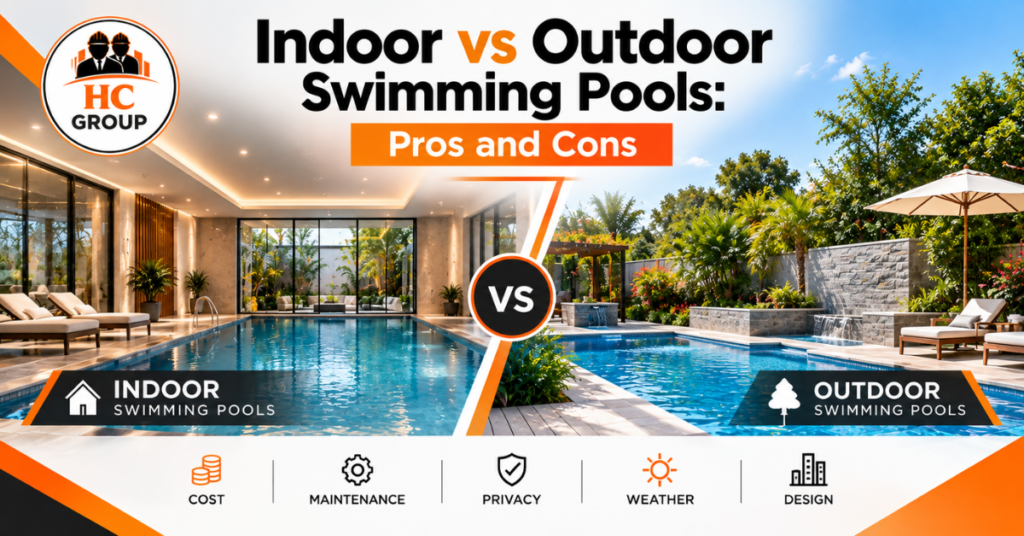
Choosing between an indoor and outdoor swimming pool is an important decision because the type of pool you select can affect construction requirements, maintenance, energy consumption, privacy, usability, and the overall experience of the property. An indoor swimming pool provides an enclosed environment where temperature, cleanliness, and swimming conditions can be managed more consistently throughout the year. In contrast, an outdoor pool offers an open-air experience with natural sunlight, fresh air, landscaping opportunities, and a strong connection with the surrounding property. Both options can add recreational and aesthetic value, but each comes with different construction considerations and ongoing requirements. The right choice depends on factors such as available space, budget, local climate, intended usage, privacy requirements, and long-term maintenance expectations. Homeowners who want to swim regardless of rain, excessive heat, or seasonal changes may prefer an enclosed pool environment. Those who enjoy outdoor entertainment, gardens, patios, and natural surroundings may find an outdoor design more suitable. It is also important to consider heating, filtration, ventilation, drainage, lighting, and safety before making a final decision. Understanding the advantages and disadvantages of both options allows property owners to choose a swimming pool solution that matches their lifestyle and investment goals.
What Is the Difference Between Indoor and Outdoor Swimming Pools?
An indoor swimming pool is constructed within an enclosed or partially enclosed structure, allowing the swimming environment to be protected from many external weather conditions. Because the pool is inside, homeowners can have greater control over air temperature, water temperature, humidity, ventilation, and privacy. Outdoor pools, on the other hand, are installed in open spaces such as gardens, backyards, terraces, resorts, farmhouses, or recreational areas. Their design is naturally influenced by sunlight, rainfall, wind, temperature changes, surrounding vegetation, and seasonal conditions. The major difference is therefore not simply location but the level of environmental control required for each pool type.
Indoor designs generally require additional building services, ventilation, moisture management, and mechanical systems. Outdoor designs usually require greater attention to landscaping, drainage, weather protection, water evaporation, and seasonal maintenance. Both can be customized with modern tiles, lighting, water features, filtration systems, steps, seating areas, and attractive surrounding finishes. Before construction begins, the property layout and intended pool usage should be carefully evaluated to determine which approach offers the best combination of comfort, practicality, and long-term value.
Advantages of an Indoor Swimming Pool
An indoor swimming pool can be particularly attractive for homeowners who want greater control over their swimming environment and more consistent usability throughout the year. Enclosing the pool protects it from direct rainfall, falling leaves, dust, strong winds, and other outdoor elements that can increase cleaning requirements. It can also offer greater privacy, especially for residential properties where homeowners do not want the pool exposed to neighboring buildings or public areas. Temperature control is another major benefit because heating systems can maintain comfortable water conditions even when outdoor temperatures change significantly. With appropriate insulation, ventilation, and humidity management, the space can become a dedicated wellness and recreation area rather than simply a seasonal outdoor feature. An enclosed swimming area may also complement luxury homes, private fitness spaces, hotels, clubs, and wellness facilities where year-round usage is important. However, these advantages are achieved through additional planning and specialized building systems. The following features explain why many property owners consider an indoor pool a premium long-term investment.
Year-Round Swimming
One of the biggest advantages is the ability to use the pool during different seasons. Proper heating and climate-control systems can make swimming more comfortable when outdoor conditions are unsuitable.
Greater Privacy
An enclosed pool provides a naturally private environment. Windows, architectural screening, curtains, or carefully designed structures can further improve privacy.
Better Environmental Control
Temperature, ventilation, humidity, and lighting can be managed more effectively than in a completely exposed pool.
Protection From Outdoor Elements
Because the water is sheltered, there is generally less exposure to leaves, dust, rain, wind, and other outdoor debris.
Disadvantages of an Indoor Swimming Pool
Despite its advantages, an indoor swimming pool can require a higher level of planning, investment, and technical management than a conventional outdoor pool. The structure surrounding the pool must be designed to handle moisture, condensation, ventilation, and the weight and environmental conditions associated with the swimming area. Heating requirements can also increase operating expenses because homeowners may want to maintain both comfortable water and air temperatures throughout the year. Humidity is another important consideration because excessive moisture can contribute to condensation, unpleasant indoor conditions, surface deterioration, and damage to building materials if it is not properly controlled.
Specialized ventilation and dehumidification systems may therefore be necessary, particularly for larger pools or enclosed recreational facilities. Construction can also become more complicated if the pool needs to be integrated into an existing building rather than designed as part of a new structure. Lighting, insulation, waterproofing, drainage, mechanical rooms, and access for equipment maintenance must all be considered during planning. For these reasons, indoor pool construction should involve professionals who understand both swimming pool engineering and the building environment around the pool.
Advantages of Outdoor Swimming Pools
An outdoor pool creates a completely different experience by bringing swimming into an open and naturally illuminated environment. Sunlight, fresh air, surrounding greenery, patios, decks, and outdoor seating can transform the pool into the central feature of a residential or commercial landscape. Homeowners can use the surrounding area for relaxation, family activities, entertaining guests, exercise, and outdoor gatherings. Outdoor designs also offer considerable flexibility because the pool can be positioned alongside gardens, lawns, terraces, pergolas, water features, and other landscape elements. Natural ventilation eliminates many of the humidity-management challenges associated with enclosed pool structures, although water evaporation and weather exposure still need to be managed. Construction can also be more straightforward when a suitable outdoor site is already available, although excavation, soil conditions, drainage, access, and landscaping still require careful planning. An outdoor pool can visually expand the usable living space by creating a transition between indoor rooms and the garden or recreational area. With appropriate design, lighting, filtration, and landscaping, it can become both a functional swimming facility and an attractive architectural feature.
Key benefits include:
- Natural sunlight and fresh air
- Strong connection with gardens and landscaping
- Excellent option for outdoor entertainment
- Flexible pool shapes and surrounding layouts
- Attractive integration with patios and seating
- Natural ventilation
- Opportunities for decorative landscaping
- Suitable for residential and commercial properties
- Wide range of tile, coping, lighting, and water-feature options
Disadvantages of Outdoor Swimming Pools
Outdoor pools provide an enjoyable open-air experience, but their performance is more directly affected by the surrounding environment. Rain, dust, leaves, insects, wind, sunlight, and temperature changes can increase cleaning and maintenance requirements. Water evaporation can become more noticeable during hot weather, which may increase the need for water replacement and chemical balancing. Strong sunlight can also affect certain pool finishes and may contribute to algae growth if water chemistry and circulation are not properly managed. In colder regions, seasonal preparation or winterization can become an important part of pool ownership, while in warmer climates excessive heat can increase evaporation and cooling demands. The surrounding landscape must also be maintained because grass, soil, plants, and trees can introduce debris into the pool. Proper drainage is essential to prevent rainwater from entering the pool area or accumulating around the structure. These factors do not make an outdoor pool a poor choice, but they demonstrate why site planning and an appropriate maintenance strategy are essential for long-term performance.
Indoor vs Outdoor Pool: Cost Comparison
Cost is one of the most important considerations when comparing the two pool types, but there is no universal price because every project has different dimensions, materials, site conditions, equipment, and construction requirements. An indoor swimming pool may involve additional expenses for the enclosure, structural work, ventilation, dehumidification, insulation, heating, lighting, and moisture-resistant finishes. An outdoor pool may have fewer building-related requirements but can require investment in excavation, retaining structures, landscaping, drainage, outdoor lighting, paving, covers, and weather-related protection.
The pool’s size and shape also have a major influence on construction cost, while premium tiles, filtration equipment, heating systems, water features, and automated controls can further increase the project budget. Site accessibility and soil conditions can affect excavation and construction expenses as well. Homeowners should therefore compare the complete project scope instead of focusing only on the initial pool shell or excavation price. A detailed design and specification can help identify construction costs, equipment requirements, operational expenses, and future maintenance needs before work begins. Looking at both upfront and long-term costs provides a much more accurate picture of the overall investment.
| Cost Factor | Indoor Pool | Outdoor Pool |
| Pool Structure | High importance | High importance |
| Enclosure | Required | Usually not required |
| Heating | Often important year-round | Often seasonal |
| Ventilation | Major consideration | Natural ventilation |
| Humidity Control | Required | Not normally required |
| Landscaping | Optional | Often important |
| Drainage | Important | Very important |
| Lighting | Indoor architectural lighting | Outdoor and pool lighting |
| Weather Exposure | Lower | Higher |
| Seasonal Maintenance | Generally lower exposure | May be higher |
Maintenance Requirements for Indoor and Outdoor Pools
Maintenance is essential regardless of where a pool is located, but the tasks can differ considerably between indoor and outdoor environments. An indoor pool generally has less exposure to leaves, dust, insects, rain, and wind, which can reduce some cleaning requirements. However, homeowners must pay close attention to ventilation, humidity, heating, filtration, water chemistry, and dehumidification equipment. An outdoor pool typically requires more frequent removal of leaves and debris, monitoring of water evaporation, surface cleaning, chemical balancing, and inspection of surrounding landscaping.
Pool covers can help reduce evaporation and keep debris out when the pool is not being used. Both types require regular inspection of pumps, filters, drains, lights, tiles, coping, waterproofing, and other components. A professional maintenance schedule can identify small issues before they develop into expensive repairs. The ideal maintenance approach should therefore be based on pool design, equipment, usage frequency, surrounding environment, and water-treatment system rather than simply choosing between indoor and outdoor construction.
Read More: Swimming Pool Renovation Guide: When and Why You Should Upgrade
Indoor Pool Maintenance Checklist
- Water chemistry testing
- Filtration system inspection
- Heating system checks
- Ventilation maintenance
- Humidity monitoring
- Dehumidification system servicing
- Tile and surface inspection
Outdoor Pool Maintenance Checklist
- Skimming leaves and debris
- Water-level monitoring
- Chemical balancing
- Filter cleaning
- Algae prevention
- Drainage inspection
- Landscaping maintenance
- Seasonal preparation where required
Energy Efficiency and Pool Heating Considerations
Energy consumption should be considered during the design stage because heating, filtration, pumps, lighting, ventilation, and water treatment can contribute significantly to ongoing operating costs. An indoor swimming pool can benefit from a controlled environment, but maintaining comfortable air and water temperatures may require continuous heating and dehumidification. Proper insulation, energy-efficient equipment, pool covers, and smart controls can help reduce unnecessary energy use. Outdoor pools can benefit from natural sunlight, but they may experience greater heat loss during cooler periods and higher evaporation during hot weather. Pool covers can be useful for reducing evaporation and retaining heat when the pool is not being used. Heat pumps and solar heating solutions may also be considered depending on the property’s location, energy goals, and available installation space. Efficient pumps and variable-speed equipment can further improve operational performance while reducing unnecessary electricity consumption. Rather than selecting equipment based only on purchase price, homeowners should consider efficiency, expected usage, maintenance requirements, and long-term operating costs.
Which Pool Type Is Better for Different Properties?
The ideal pool type depends heavily on the property itself and how the facility will be used. Luxury homes with sufficient internal space may benefit from an enclosed pool that functions as part of a private wellness or recreation area. Large villas and farmhouses often have enough outdoor space to accommodate a pool alongside gardens, patios, lawns, and entertainment areas. Hotels and resorts may choose outdoor pools because they can become major landscape and guest-experience features, while some high-end facilities may use enclosed pools for year-round wellness services.
Sports clubs and fitness facilities can also benefit from indoor designs where consistent swimming conditions are important. Commercial properties must additionally consider operating schedules, visitor volume, safety, accessibility, maintenance, and energy consumption. The decision should therefore be based on the property’s architecture, available land, intended users, budget, and long-term operational strategy. A professional site assessment can help determine which pool configuration will work best with an experienced construction team without compromising surrounding spaces or essential building systems.
Residential Properties
Outdoor pools are often suitable for spacious homes, villas, and farmhouses where landscaping and outdoor entertainment are priorities.
Hotels and Resorts
Outdoor pools can create attractive recreational areas, while enclosed pools may provide additional year-round wellness and fitness facilities.
Fitness and Sports Facilities
Indoor facilities can be beneficial where consistent operating conditions and extended usage are important.
Luxury Properties
Either option can work well, depending on architectural design, available space, privacy expectations, and the homeowner’s lifestyle.
Design, Privacy, Safety and User Experience
Pool design goes beyond selecting a shape and filling the structure with water. The surrounding architecture, lighting, flooring, access points, landscaping, seating, privacy features, drainage, and safety systems all contribute to the overall user experience. An indoor swimming pool can be designed as a sophisticated wellness space with large windows, controlled lighting, premium finishes, comfortable seating, and integrated changing facilities. Outdoor pools can become landscape focal points through carefully selected plants, paving, pergolas, water features, outdoor kitchens, and lounge areas. Privacy should also be addressed early through architectural screening, boundary walls, landscaping, strategic positioning, or appropriate glazing. Safety requires attention to access control, non-slip surfaces, lighting, appropriate barriers where required, safe circulation, and suitable supervision. Poolside materials should be selected for their durability and performance in wet conditions rather than appearance alone. A well-planned design can make the pool easier to use, maintain, and enjoy while creating a stronger connection with the property’s architecture.
How to Choose Between an Indoor and Outdoor Pool
Selecting between the two options becomes easier when homeowners evaluate their priorities before beginning the design process. The first consideration should be how frequently the pool will be used and whether year-round access is important. Available indoor and outdoor space should then be measured to determine which configuration can be constructed without creating problems for other areas of the property. The budget should include not only construction but also heating, filtration, ventilation, landscaping, maintenance, electricity, and future repairs. Privacy, weather conditions, lifestyle preferences, and the desired relationship between the pool and surrounding architecture should also be considered.
Families who want an entertainment-focused garden environment may prioritize an outdoor pool, while users focused on fitness and consistent swimming conditions may prefer an enclosed facility. The choice should also account for the technical requirements of the site, including drainage, soil conditions, structural limitations, access, and utility connections. HC Group provides professional pool construction and design solutions, helping homeowners evaluate these requirements and develop a practical pool plan based on their property’s specific needs.
Use this checklist before making the decision:
- Available construction space
- Initial project budget
- Long-term operating budget
- Desired swimming frequency
- Year-round usage requirements
- Privacy expectations
- Local weather conditions
- Heating requirements
- Maintenance capacity
- Landscaping goals
- Energy-efficiency objectives
- Safety and accessibility requirements
Indoor vs Outdoor Swimming Pools: Which Is Better?
There is no single answer to which pool type is better because the right choice depends on the homeowner’s priorities, property layout, budget, and intended use. An indoor swimming pool is generally more suitable when privacy, year-round access, environmental control, and protection from outdoor conditions are major priorities. An outdoor pool may be preferable when homeowners want natural sunlight, fresh air, landscaping, outdoor entertainment, and a stronger connection with the surrounding environment. Both options can deliver excellent recreational value when the structure, filtration, heating, drainage, finishes, and maintenance systems are properly designed. The most important step is to evaluate the complete lifecycle of the pool rather than focusing only on its appearance or initial construction expense.
A well-designed pool should provide comfortable use while remaining practical to operate and maintain over the long term. Professional planning can also prevent common problems related to water circulation, drainage, equipment placement, structural design, and finishing materials. Whether the project is residential, commercial, or part of a larger recreational facility, careful planning helps turn the selected pool concept into a durable and attractive feature. The final decision should ultimately balance functionality, aesthetics, investment, maintenance, and the experience the pool is expected to provide.
FAQ’s
Is an indoor pool better than an outdoor pool?
An indoor pool can be better for homeowners who prioritize year-round swimming, privacy, temperature control, and protection from weather. An outdoor pool may be more suitable for those who prefer natural surroundings, sunlight, landscaping, and outdoor entertainment.
Is an indoor swimming pool more expensive to build?
It can be more expensive because the project may require an enclosure, structural work, ventilation, humidity control, insulation, heating, and specialized equipment in addition to the pool itself. The final cost depends on the size, design, materials, site, and equipment specifications.
Which pool type is easier to maintain?
Both require regular water treatment, filtration, equipment inspection, and cleaning. Outdoor pools can require more debris removal and weather-related care, while indoor pools require careful management of ventilation, humidity, heating, and indoor air quality.
Can an outdoor pool be used throughout the year?
Outdoor pool usage depends on the local climate and available heating or protection systems. Pool heaters, covers, enclosures, and suitable design strategies can extend the swimming season, although they may increase construction or operating costs.
What are the main disadvantages of an indoor pool?
The main considerations include higher construction complexity, greater upfront investment, heating requirements, ventilation, humidity control, dehumidification, and the need for specialized building materials and equipment.
Which pool is best for a residential property?
The best option depends on the home’s available space, budget, privacy requirements, climate, lifestyle, and intended swimming schedule. An outdoor pool may work particularly well with spacious gardens, while an indoor design can be ideal for year-round private recreation.